3 MINUTEN DENKMAL
In this format, lesser-known aspects of Hamburg's buildings are provided in three minutes each. / presented by Denkmalverein Hamburg e.V., camera & edit: Kristian Panzer
EPISODE 3: SCHWARZENBERG KASERNE
The barracks are part of a listed ensemble of former 19th-century military buildings on the Schwarzenberg hill above Hamburg-Harburg. They are a last remnant of the lost Prussian garrison town of Harburg, which was reduced to a district of Hamburg by the Greater Hamburg Act.
Wilhelm Kühtze designed the barracks in the same typical round-arch style as the Viktoria Kaserne in Altona, which was also still Prussian at the time. From 1894 onwards, pioneer troops from Rendsburg had occupied the barracks, until Harburg lost its status as a military site due to the Treaty of Versailles. After the National Socialists seized power, Harburg was merged with other surrounding towns to form a greater Hamburg, and the so-called 'Hilfspolizei' was stationed in the buildings. After standing empty for a long time following the end of the regime, the complex now serves as the entrance to the new university campus. The Technische Universität was founded in 1978 with the aim of contributing to the revitalization of the Süderelbe region. To this end, a spacious campus was established on the grounds of the former military buildings. Resistance emerged even while construction was still underway - students, faculty, and local residents campaigned for the preservation of the historic trees and existing buildings, and against the radical reshaping of the urban landscape. They were successful: not only were old trees saved, but parts of the historic Pioneer Barracks.
Architect Nikolaus Goetze explains how history and the present can be read simultaneously in his designs for the building's extension - via visual cues.
EPISODE 2: PATERNOSTER Laeiszhof
Art and technology historian Robin Augenstein, using the example of the paternoster in the listed Laeiszhof, tells the story of the mechanical elevator and why Hamburg became the paternoster capital of the world so early on. Robin is a doctoral student in art history at the University of Hamburg and, among other things, discovered and helped to uncover what is probably the oldest surviving paternoster in the world in Hamburg's Flüggerhaus.
EPISODE 1: FINNLANDHAUS
Do you know the high-rise that was built from the top down? The surrounding Esplanade was built in the early 19th century as a neoclassical boulevard. Parts of it were demolished and redesigned in the postwar period under Chief Building Director Werner Hebebrand. This included the construction of the Finnlandhaus in 1965, designed by the architectural firm HPP. With its suspended structure, it is an outstanding example of post-war modernist engineering. Renovated in 2016/17 by owner Dieter Becken and HPP in accordance with its listed status, it has since served as the headquarters of the Becken Group.
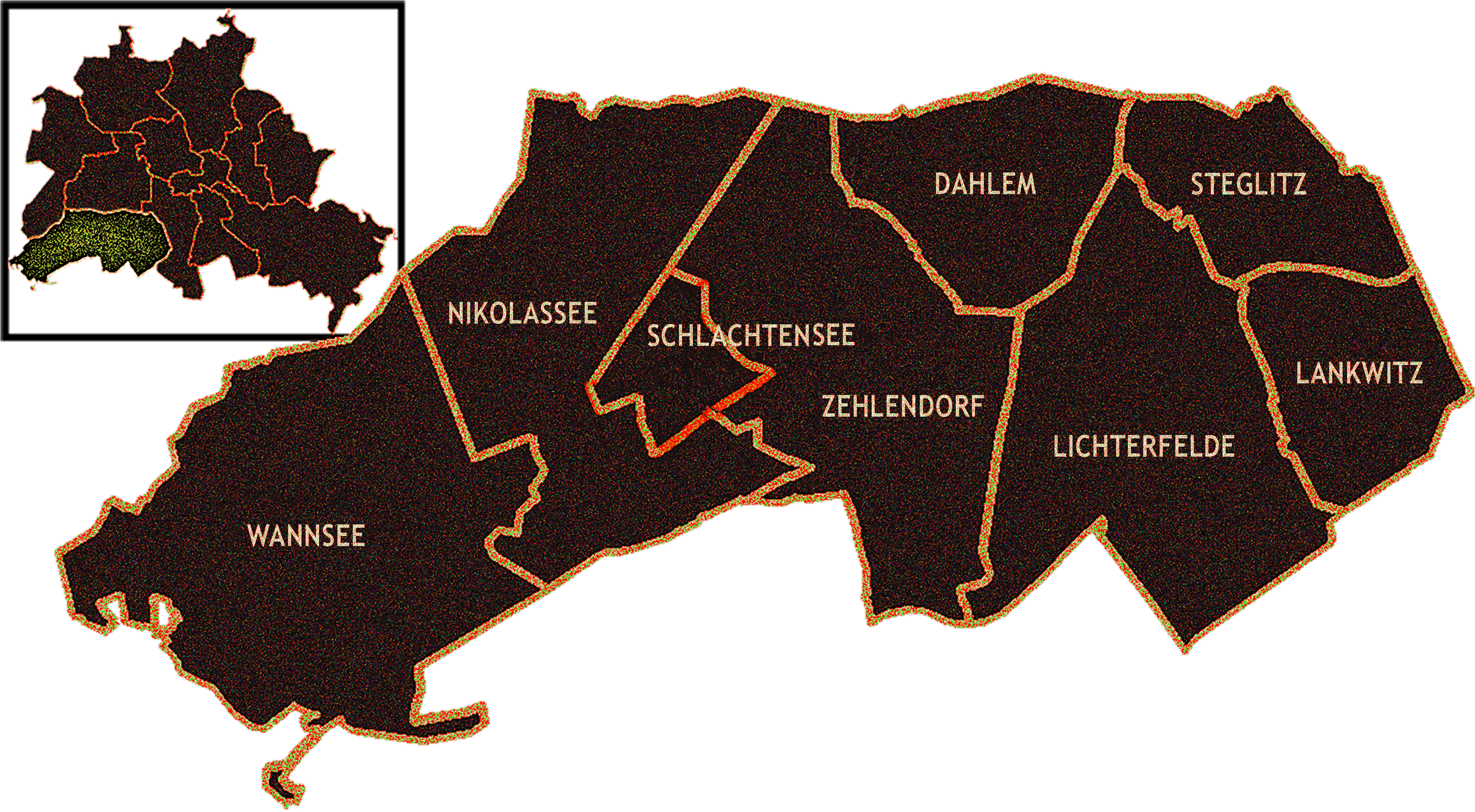
Berlin's Sixth Borough: Steglitz-Zehlendorf
Located in the southwest of Berlin, up to half of this borough consists of lakes and forests. Between them lie wealthy villa districts as well as modern residential complexes, while the Freie Universität Berlin has also transformed the area into a research landscape populated by numerous students. As centers of urban development, Waldsiedlung Zehlendorf and Studentendorf Schlachtensee showcase the modern architecture of the district.
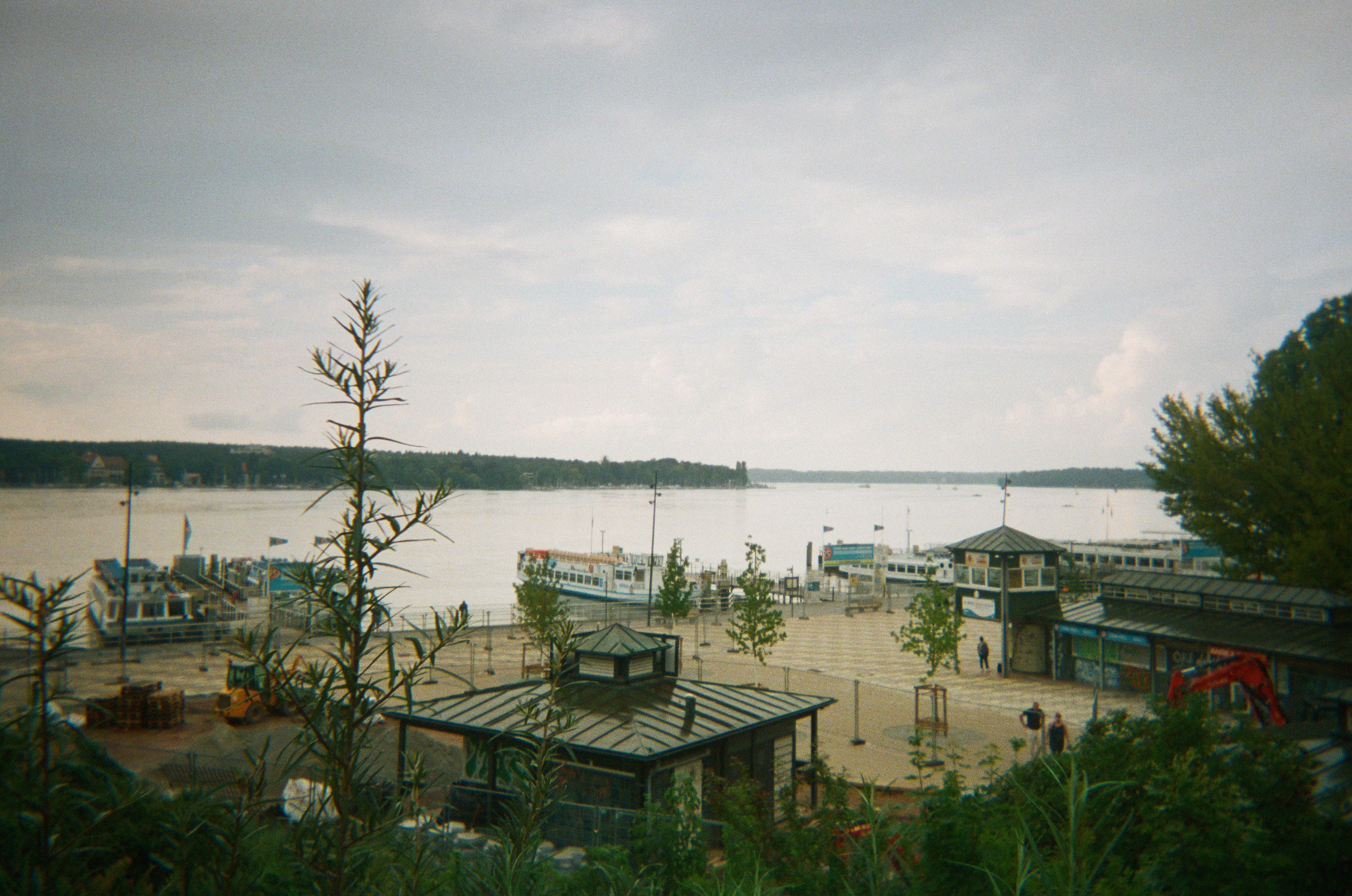
Schiffsanlegestelle Wannsee, 1984
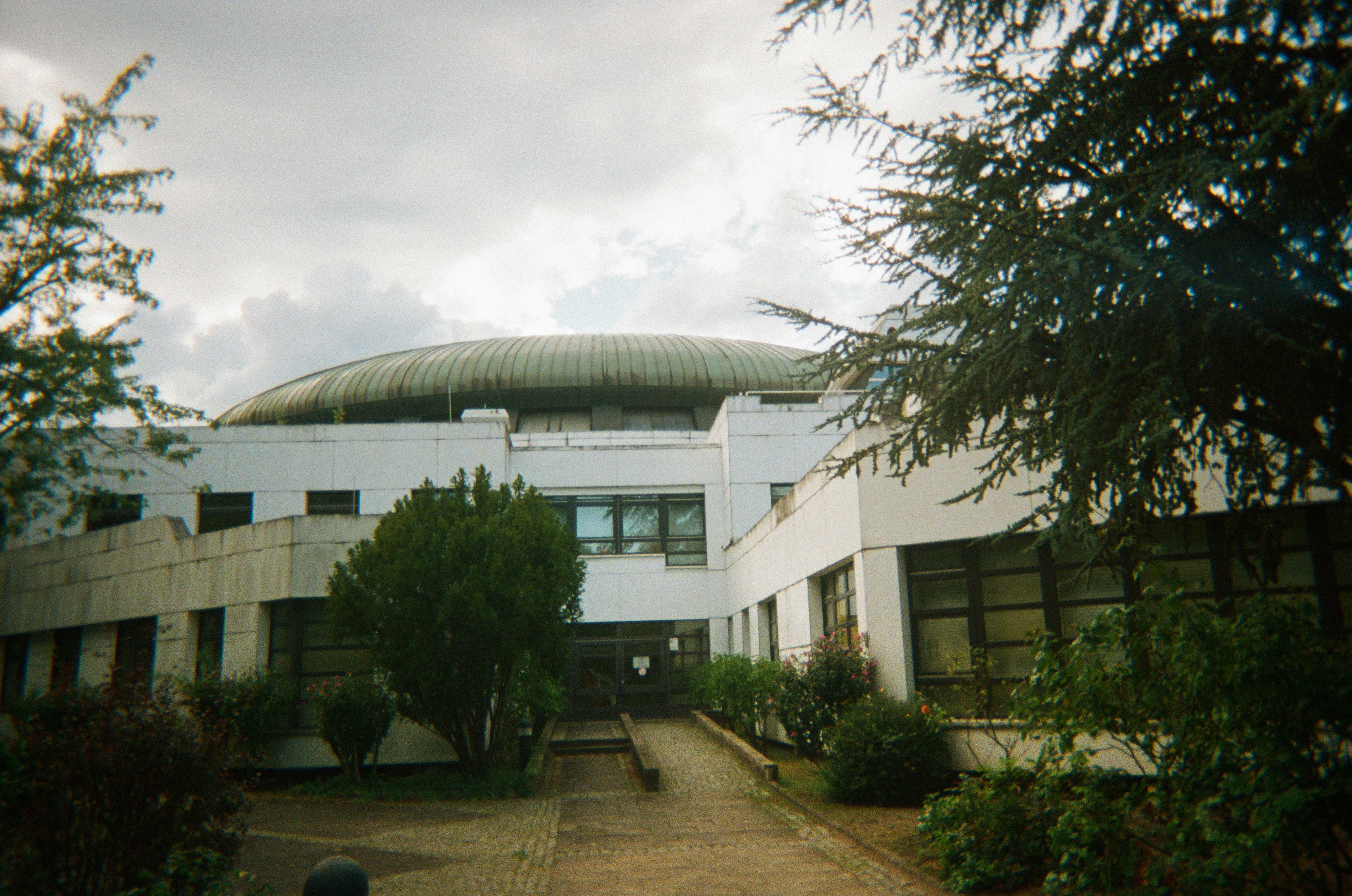
Max-Planck-Institut für Bildungsforschung, 1972-1974
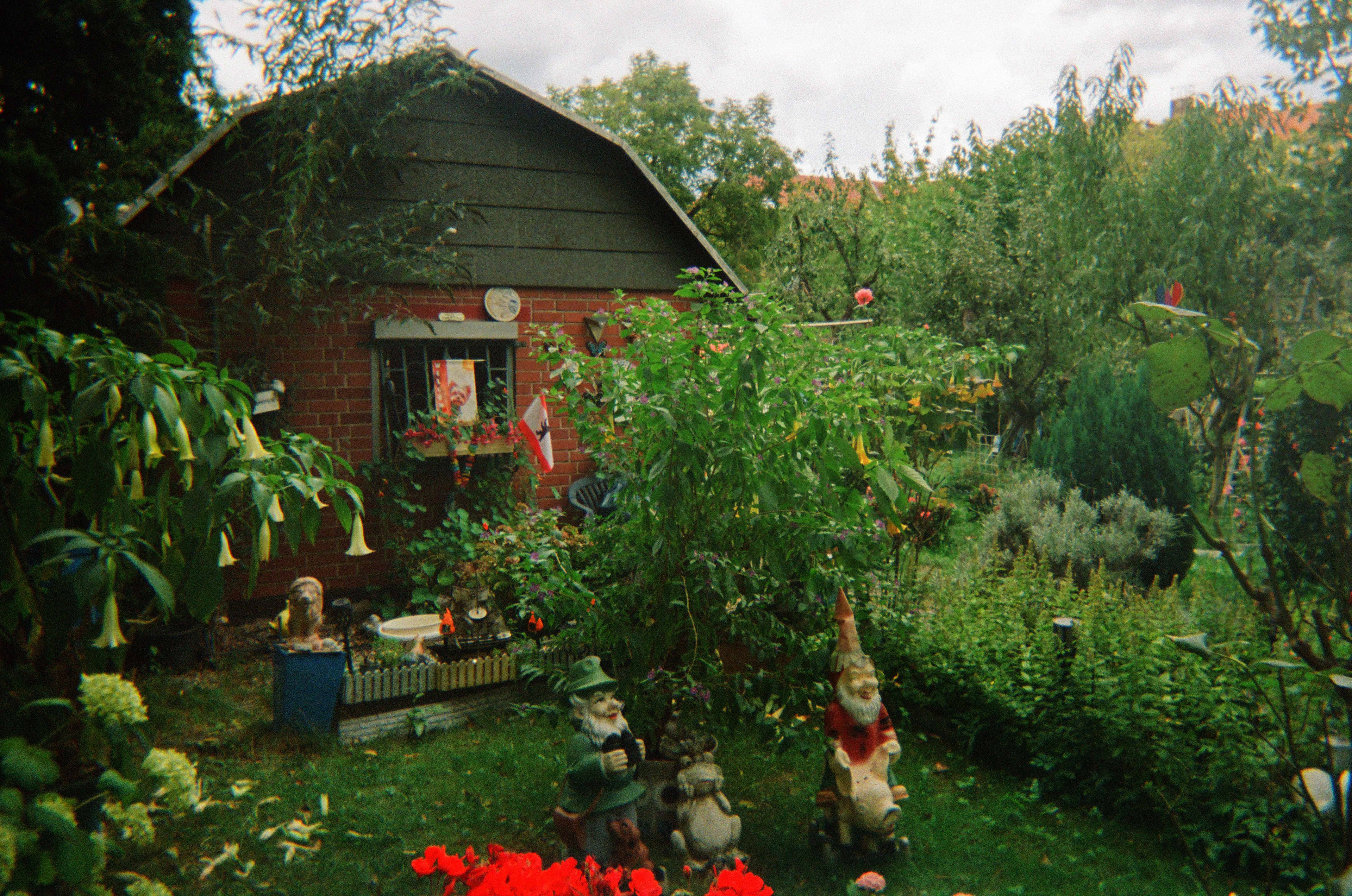
Kleingartenverein Lankwitz, 1970
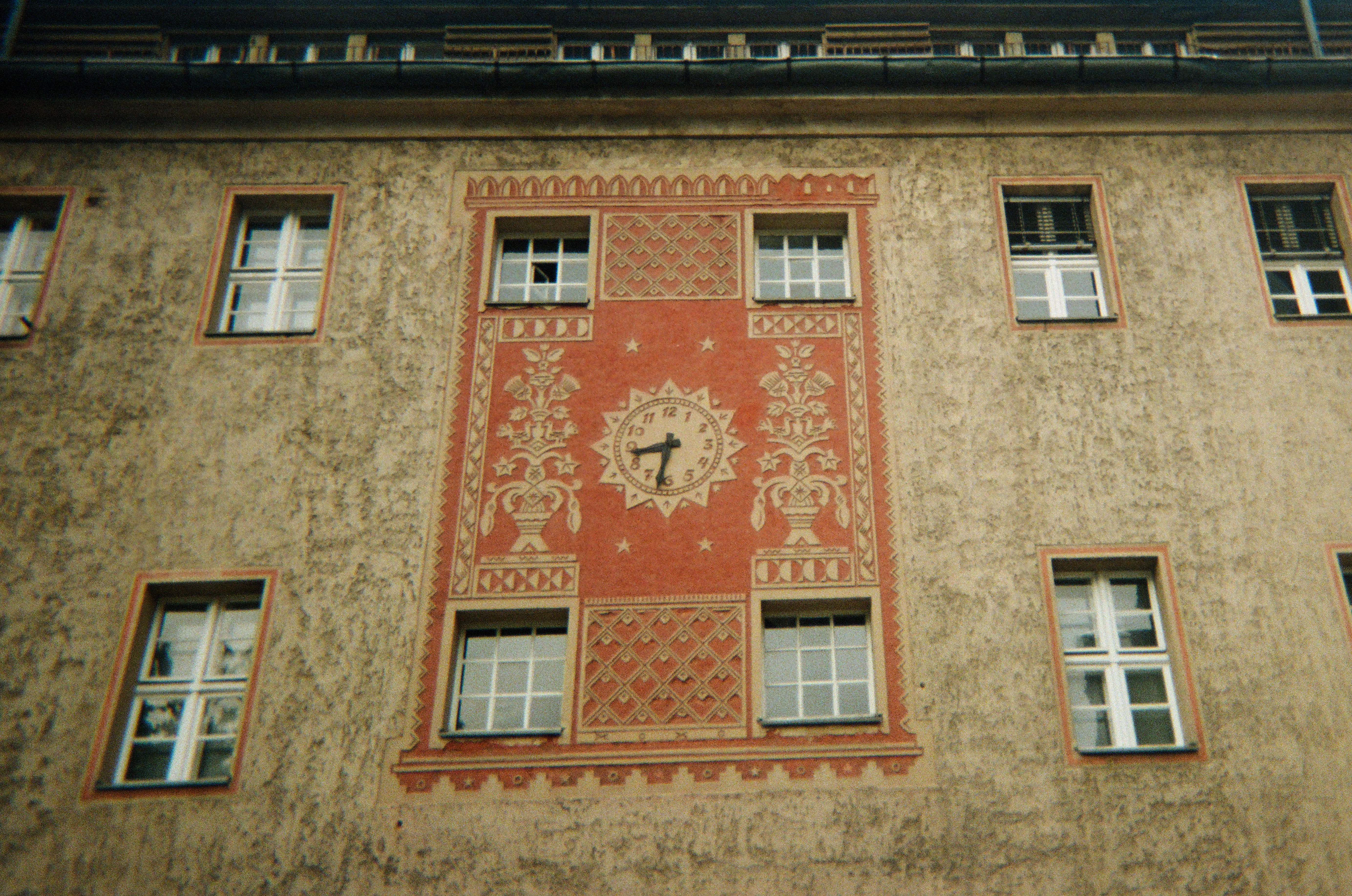
Volksschule Schlachtensee, 1926-1927
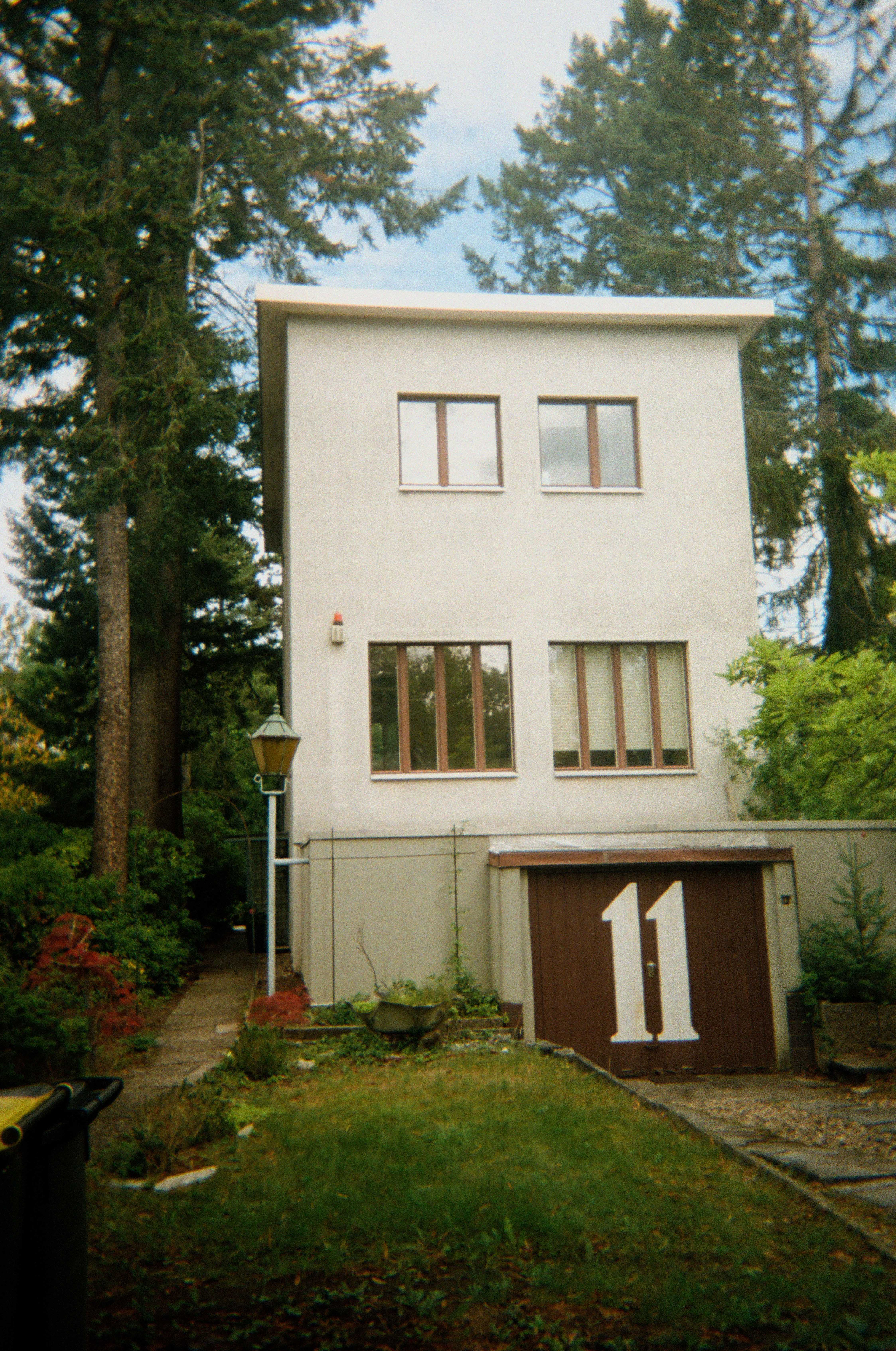
Einzelwohnhaus Schorlemerallee, 1935, nach Zerstörung im Zweiten Weltkrieg verändert wieder aufgebaut
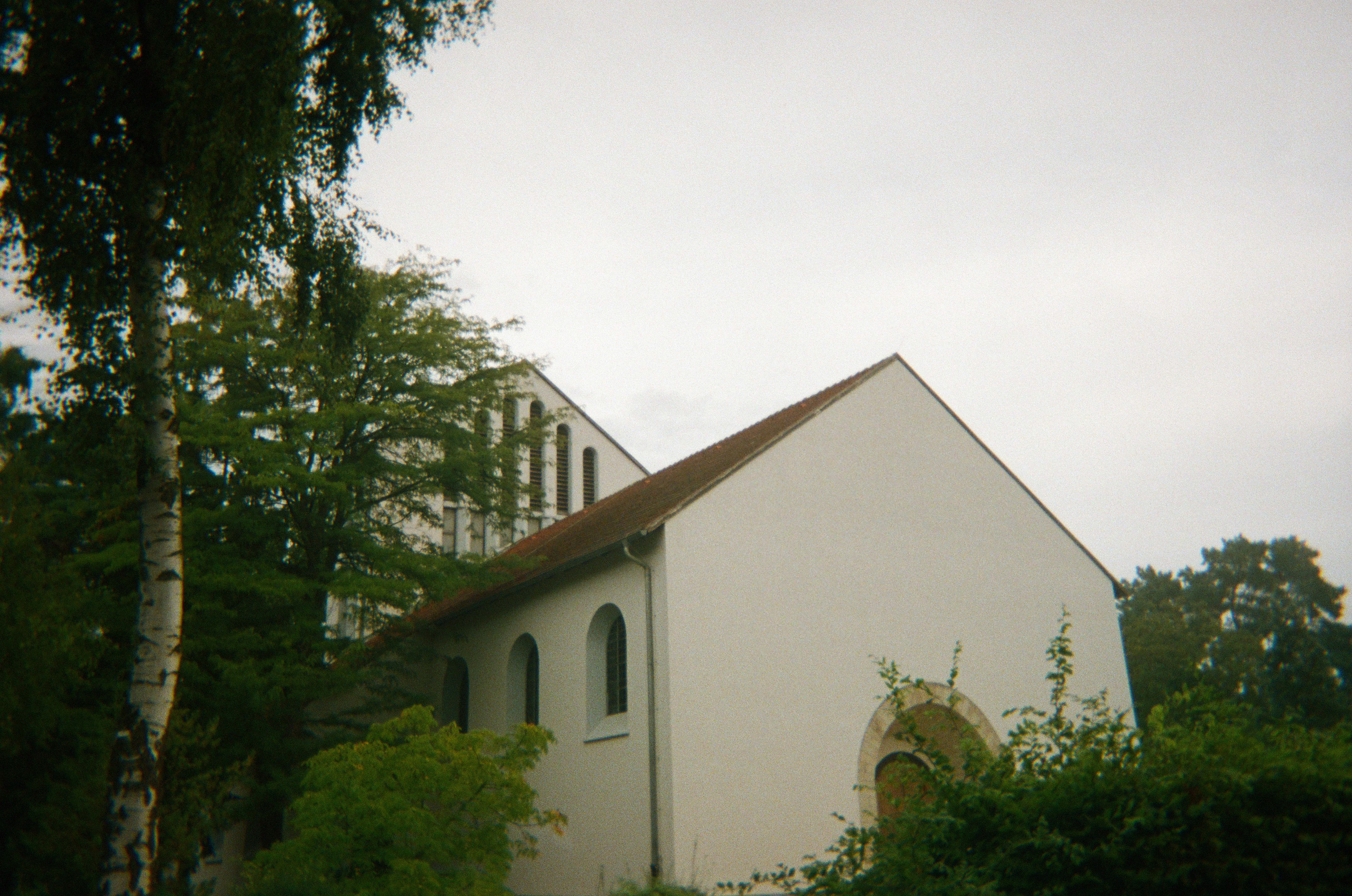
Zu den heiligen Zwölf Aposteln, 1953/54
Neues Bauen //
U-Bahnhof & Waldsiedlung Zehlendorf
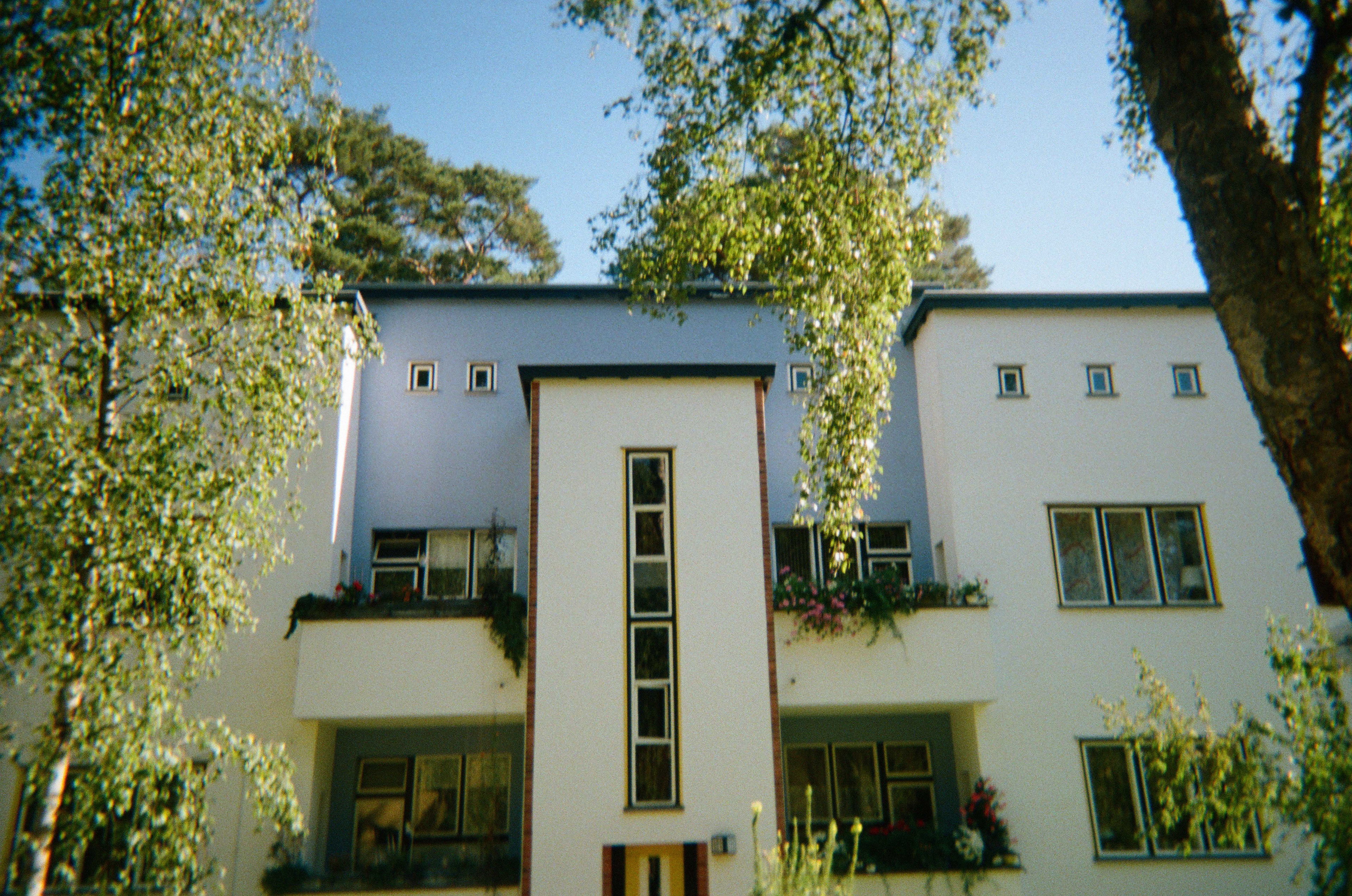
In the 1920s, many large housing estates were built in Berlin due to the immense shortage following the creation of Greater Berlin in 1920 and the associated influx of people, which necessitated a rapid and modern response. These new estates were part of an urban planning reform movement called "Neues Bauen" and were intended to replace the existing, often dark and unhygienic tenement blocks by being equipped with bathrooms, fitted kitchens and balconies.
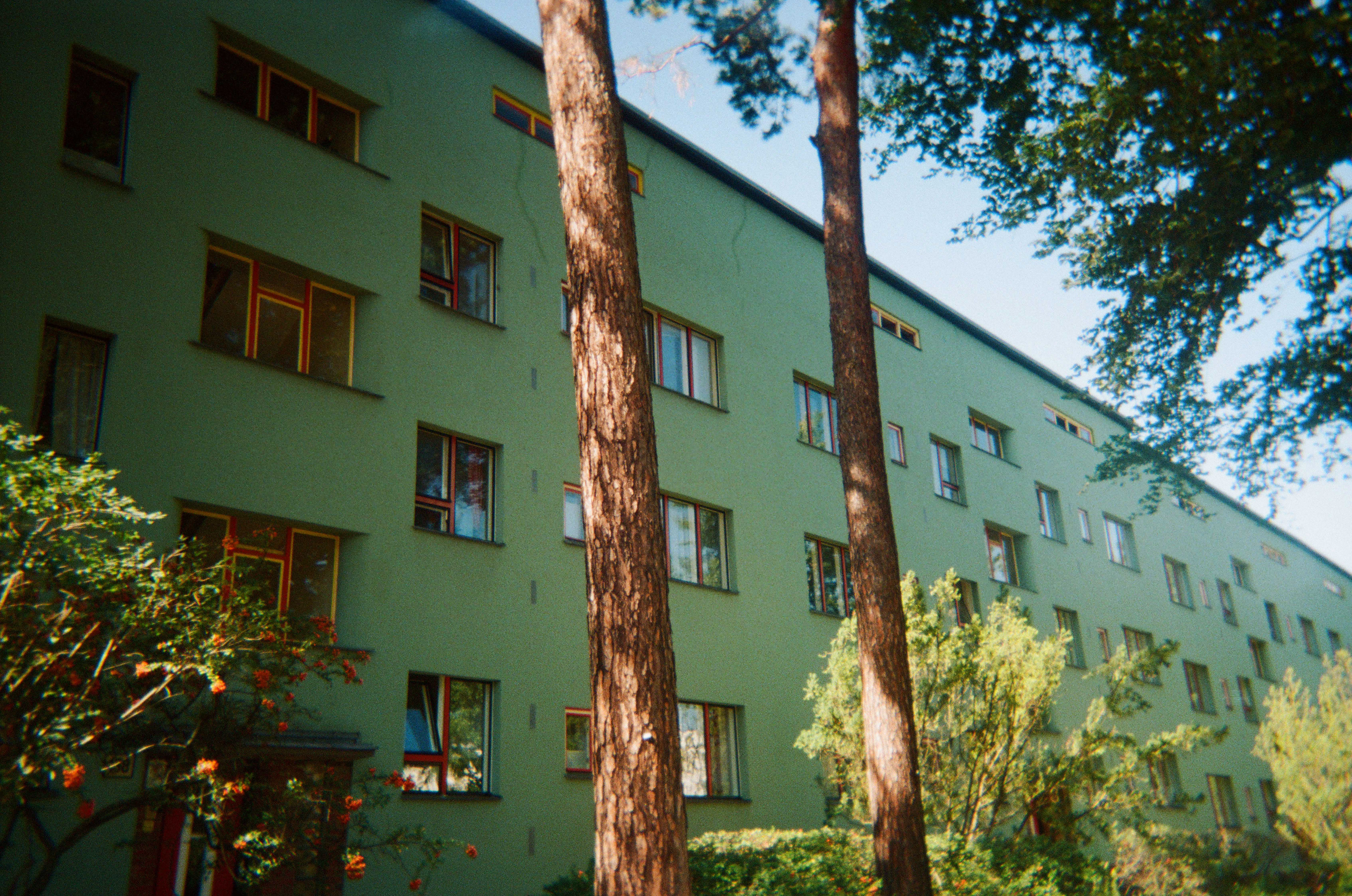
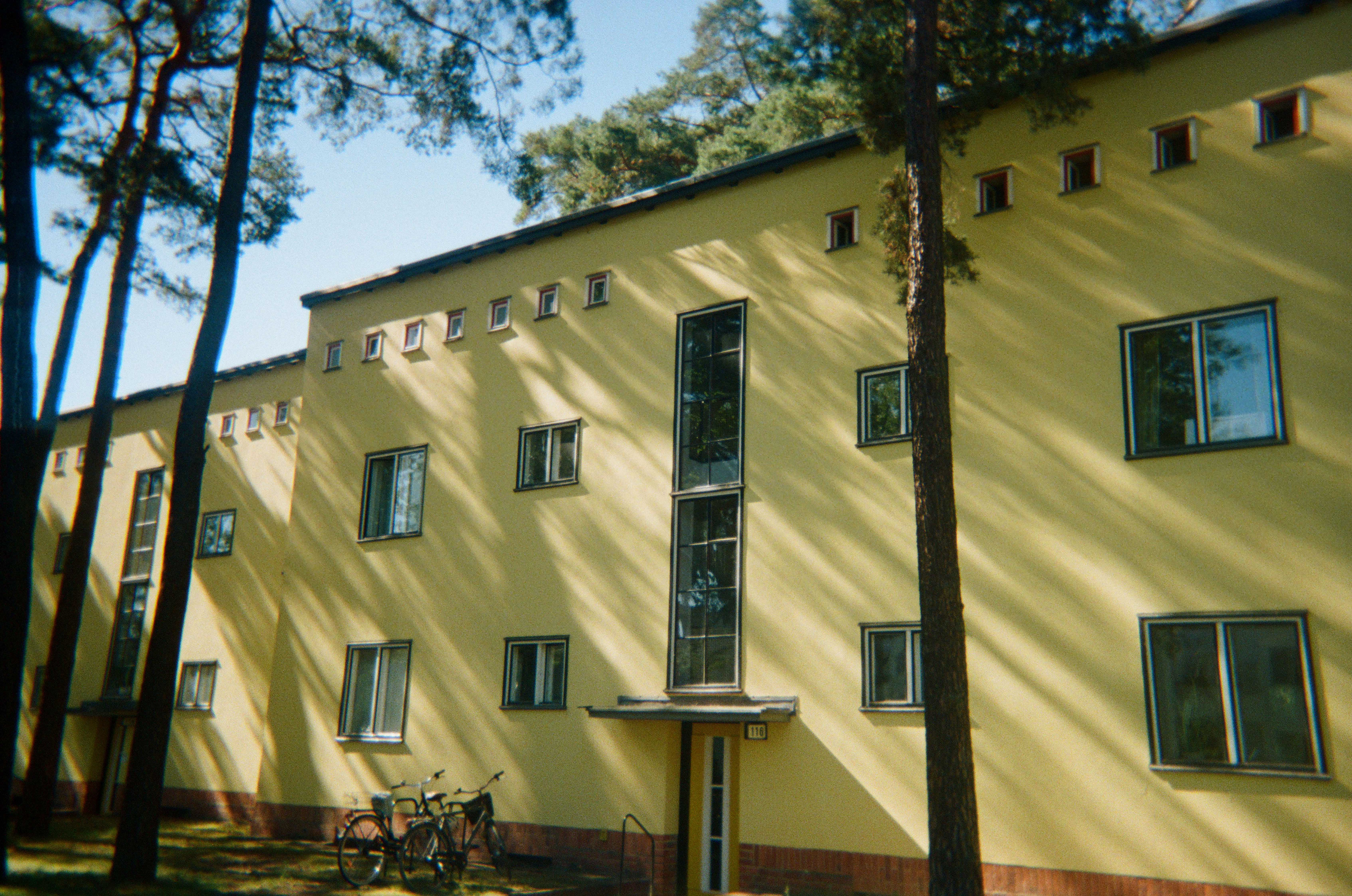
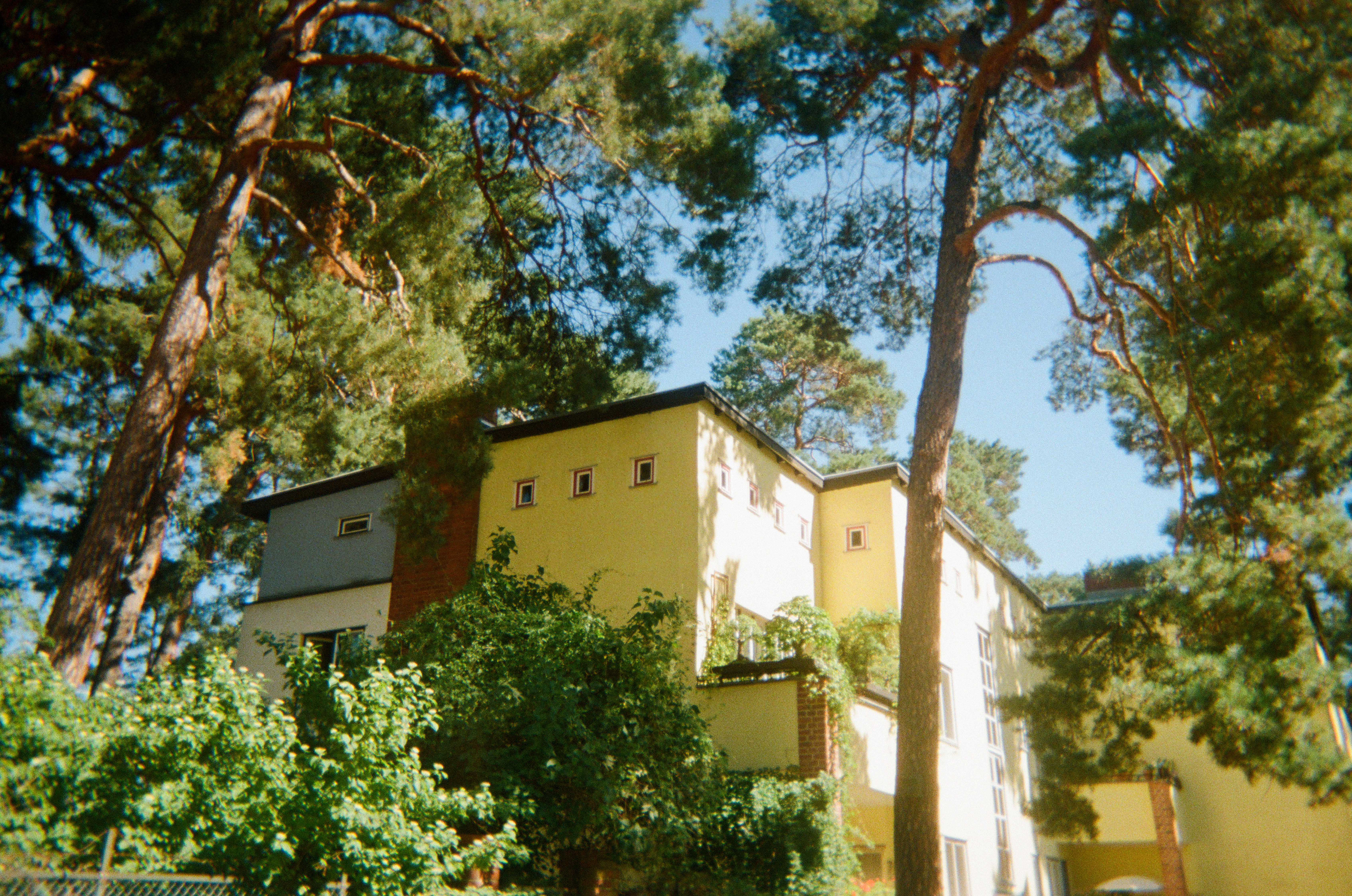
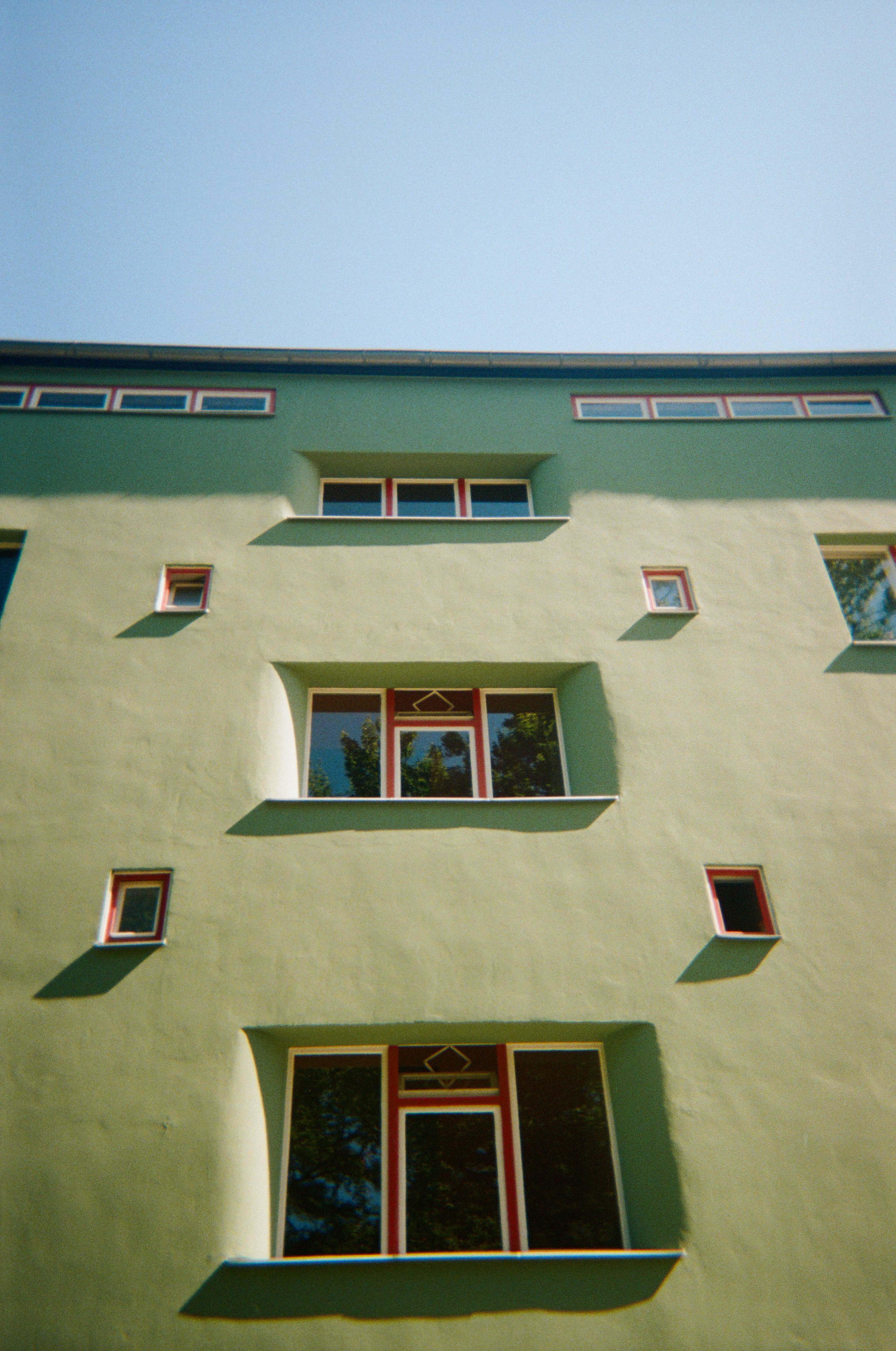
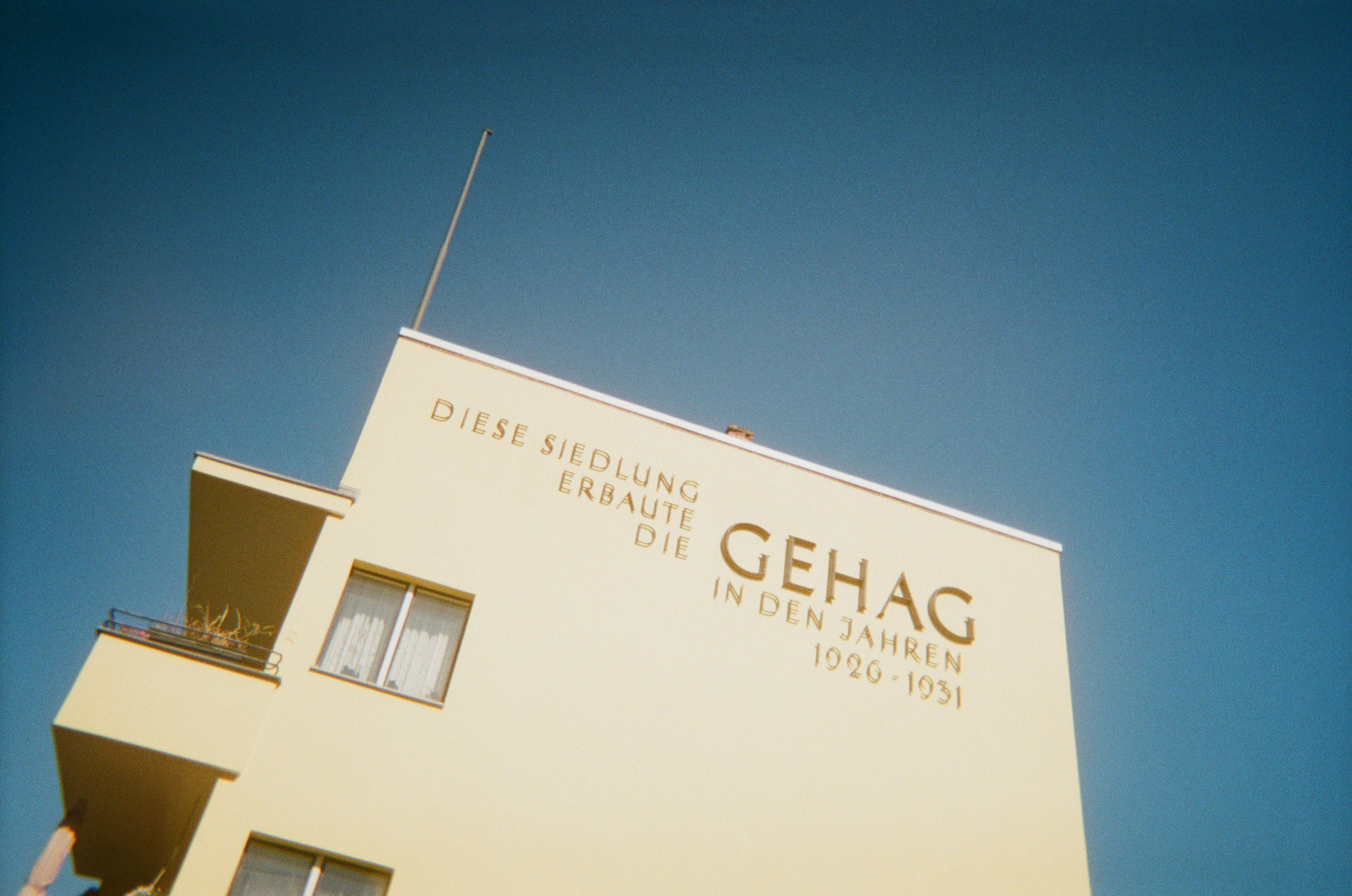
GEHAG commissioned its chief architect Bruno Taut to build Waldsiedlung Zehlendorf (Onkel Toms Hütte) under the site management of Ludmilla Herzenstein in seven construction phases between 1926 and 1931. Together with Hugo Häring and Otto Rudolf Salvisberg, they planned 1100 apartments and 800 single-family homes on the edge of the Grunewald. As an architect and urban planner, Bruno Taut was one of the leading proponents of the Neues Bauen movement in the 1920s. He first became known for individual Expressionist buildings such as the "Kristallhaus", the "Monument des Eisens" and his "Taut Kiosk", but his large-scale social housing projects in Berlin (Hufeisensiedlung, Gartenstadt Falkenberg, Siedlung Schillerpark, Waldsiedlung Zehlendorf) made him internationally recognized. In the following years, with its modern flat roofs, colorful facades and unpretentious functionality, Waldsiedlung Zehlendorf became a thorn in the side of the Nazis, who disparagingly dubbed it the "Parrot Settlement". In 1933, Bruno Taut fled the Nazi regime, which considered his work degenerate, into exile in Switzerland, Japan and finally Turkey, where he died in 1938 as a professor at the Academy of Arts in Istanbul.
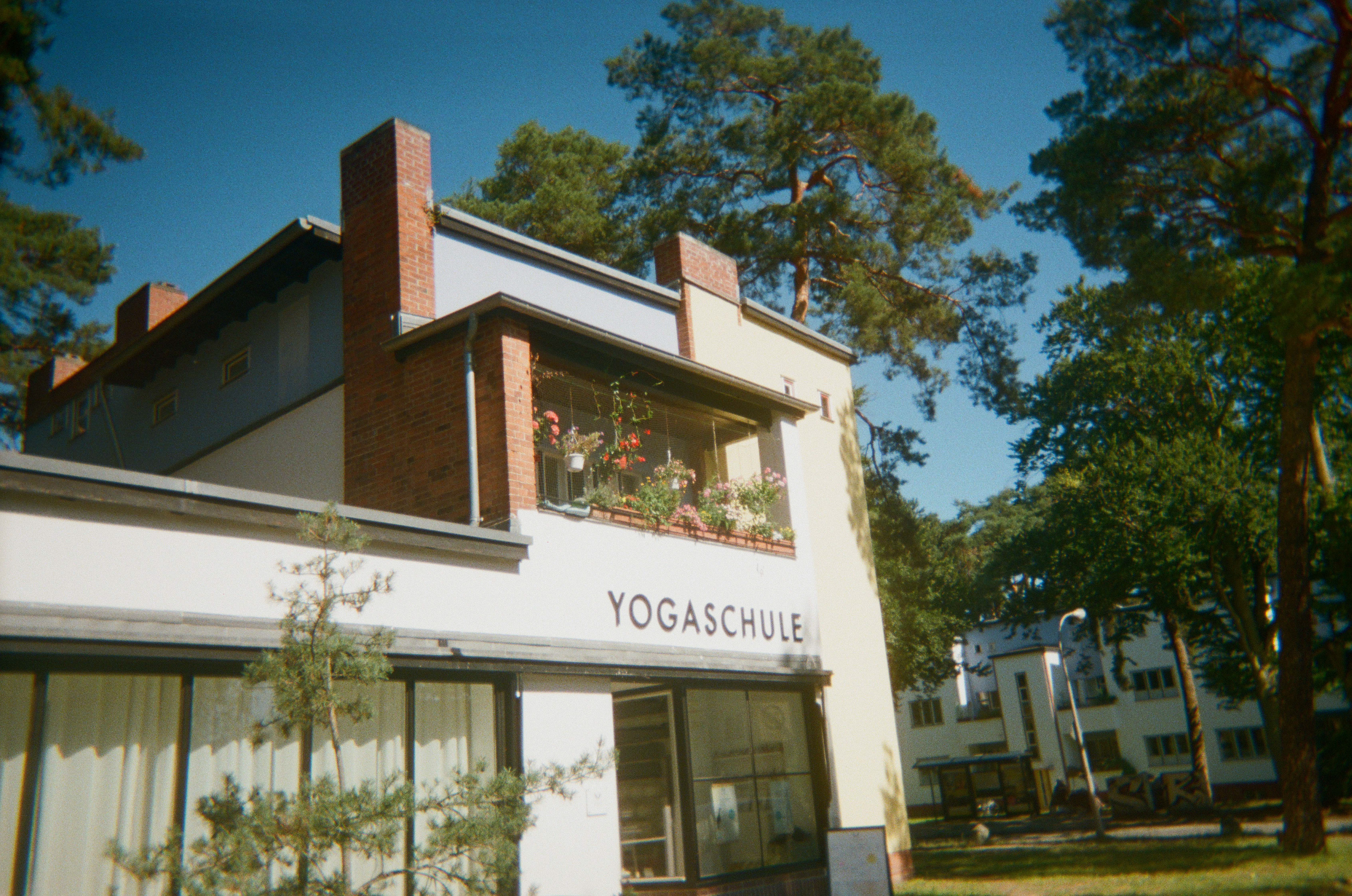
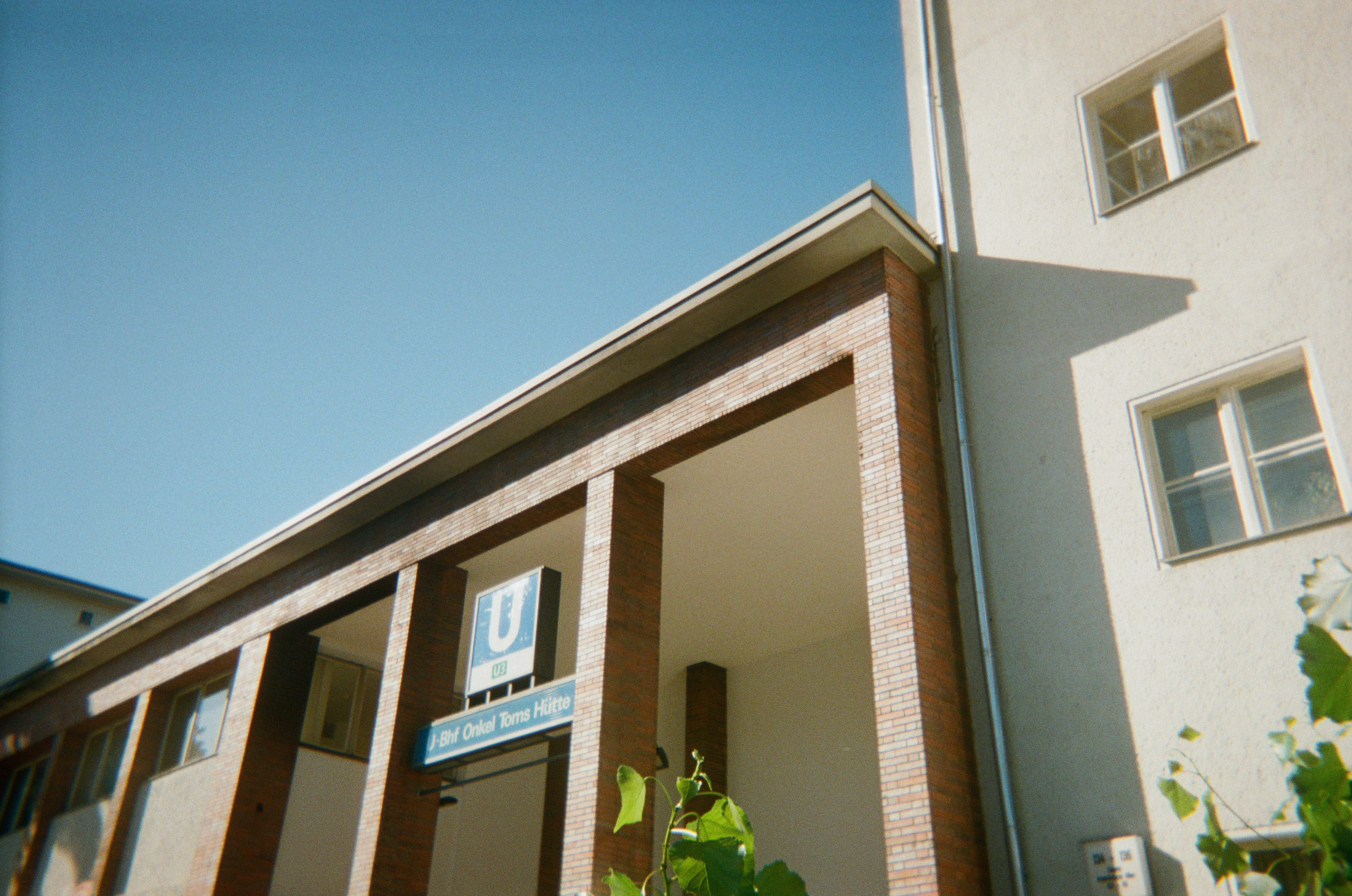
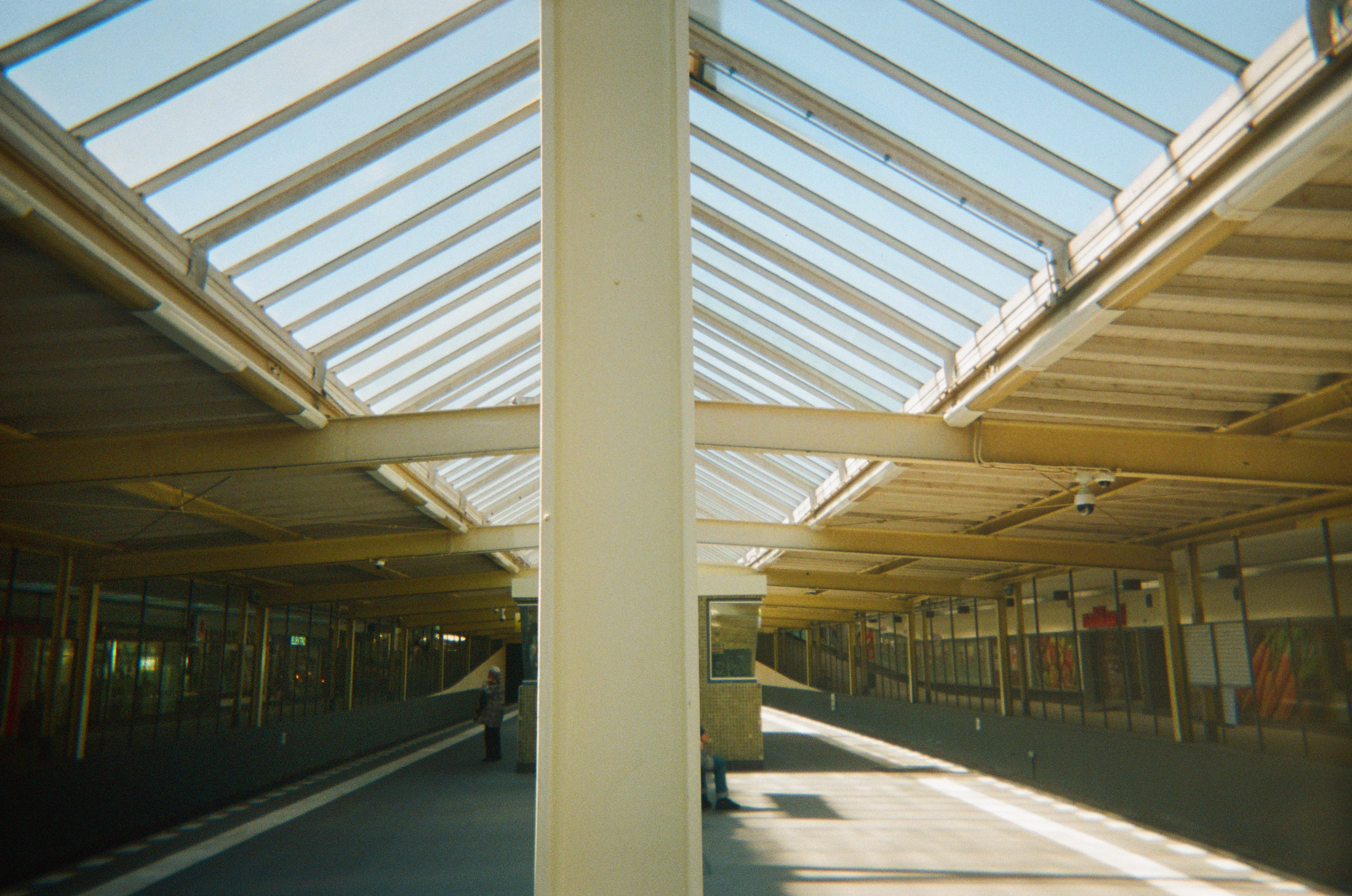
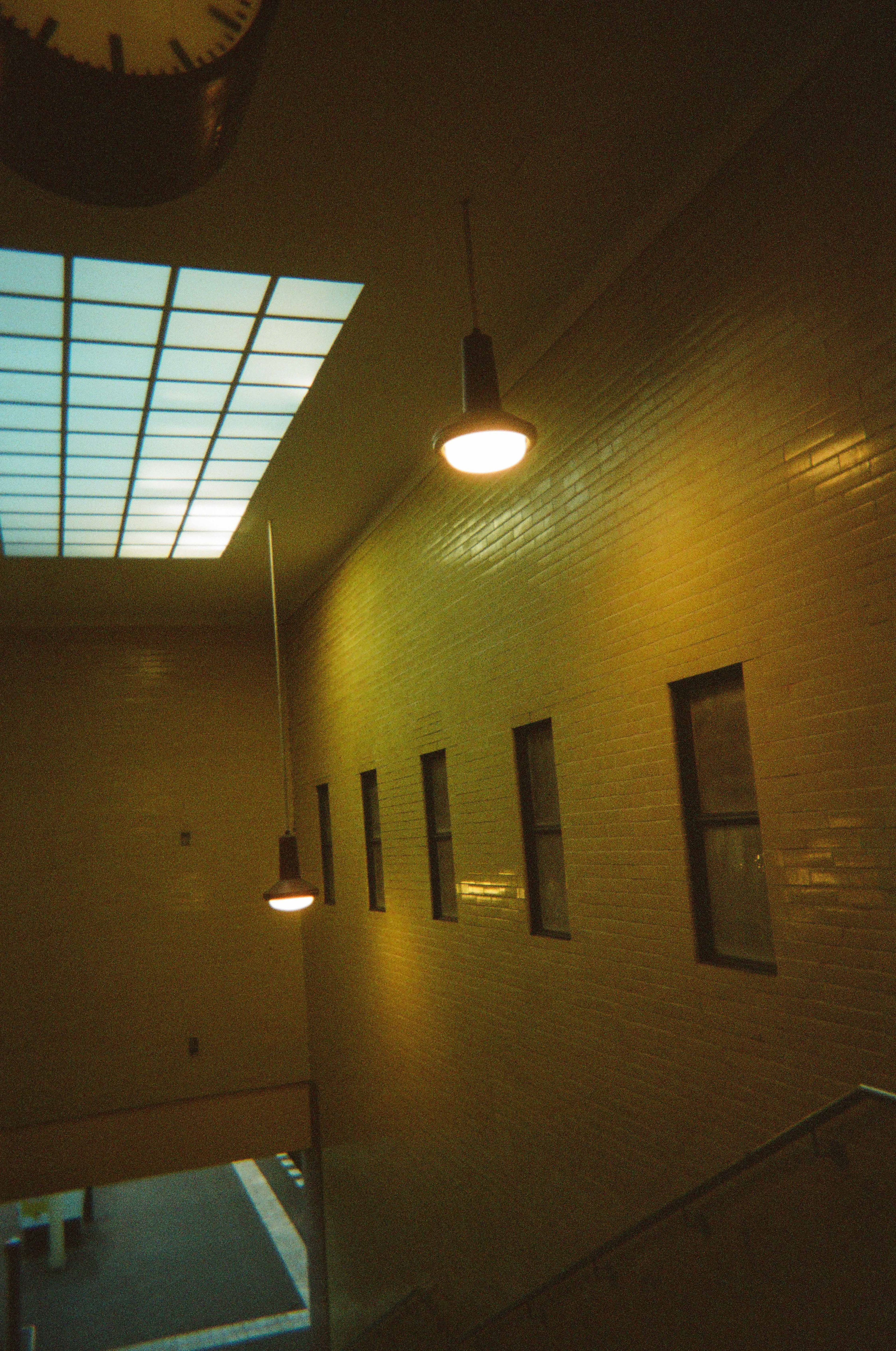
The connecting subway line opened on December 22, 1929. Otto Rudolf Salvisberg complemented the station, designed by Alfred Grenander, with single-story shopping arcades along its long sides. To complement a subway station with an urban shopping street was an absolute novelty for that time. It was primarily intended to serve the surrounding housing estate. The official name "Siedlung Onkel Toms Hütte", after which the subway station was also named, dates back to a near by pub that existed until 1979. In the beer garden of the restaurant, built in 1885, the proprietor, Thomas, built several huts as weather protection. They quickly became known locally as "Tom's Huts," and the proprietor, in turn, named his restaurant after the book "Uncle Tom's Cabin" by Harriet Beecher Stowe, published a few years earlier.
Post-War Modernism //
Studentendorf Schlachtensee
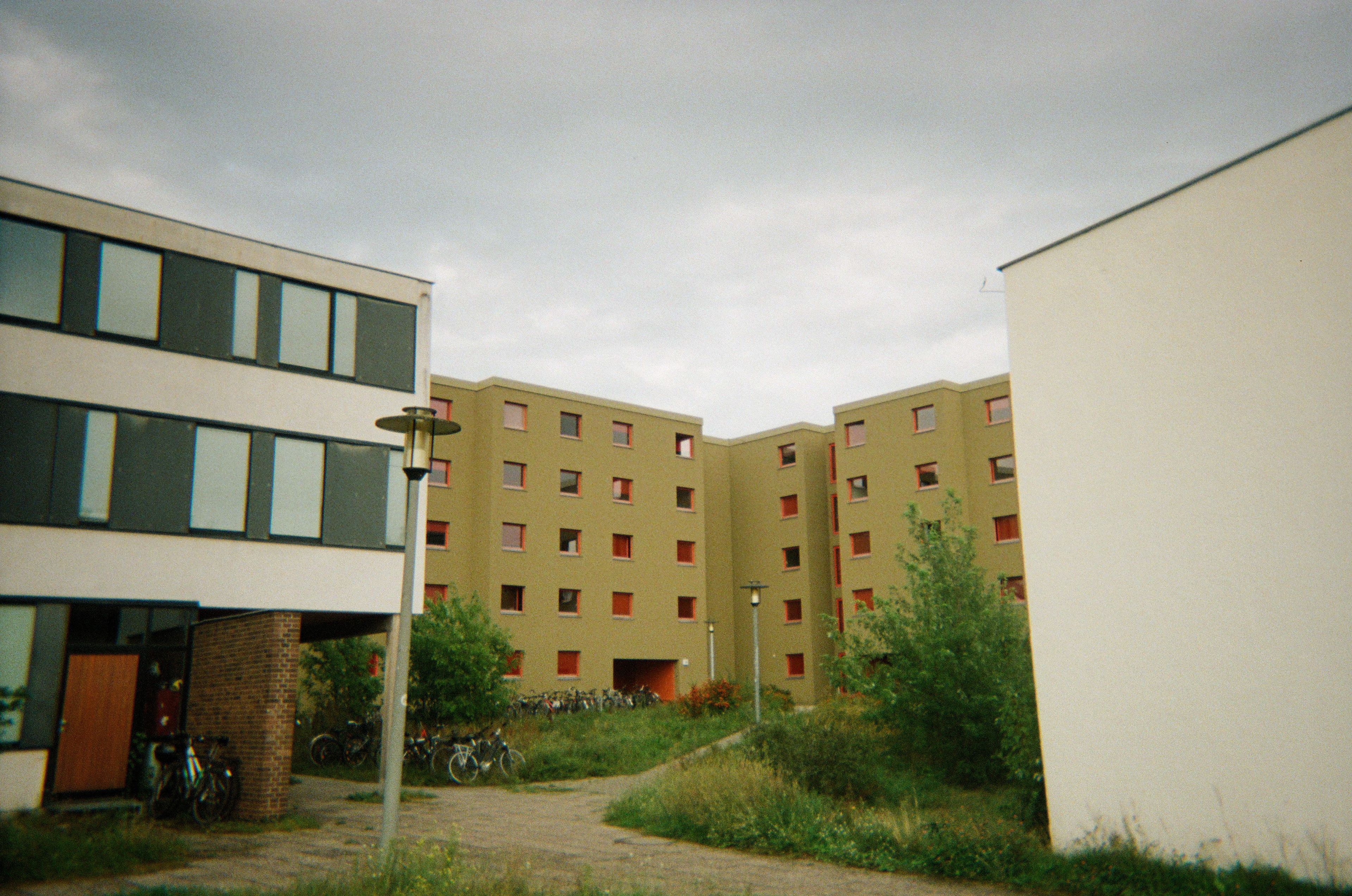
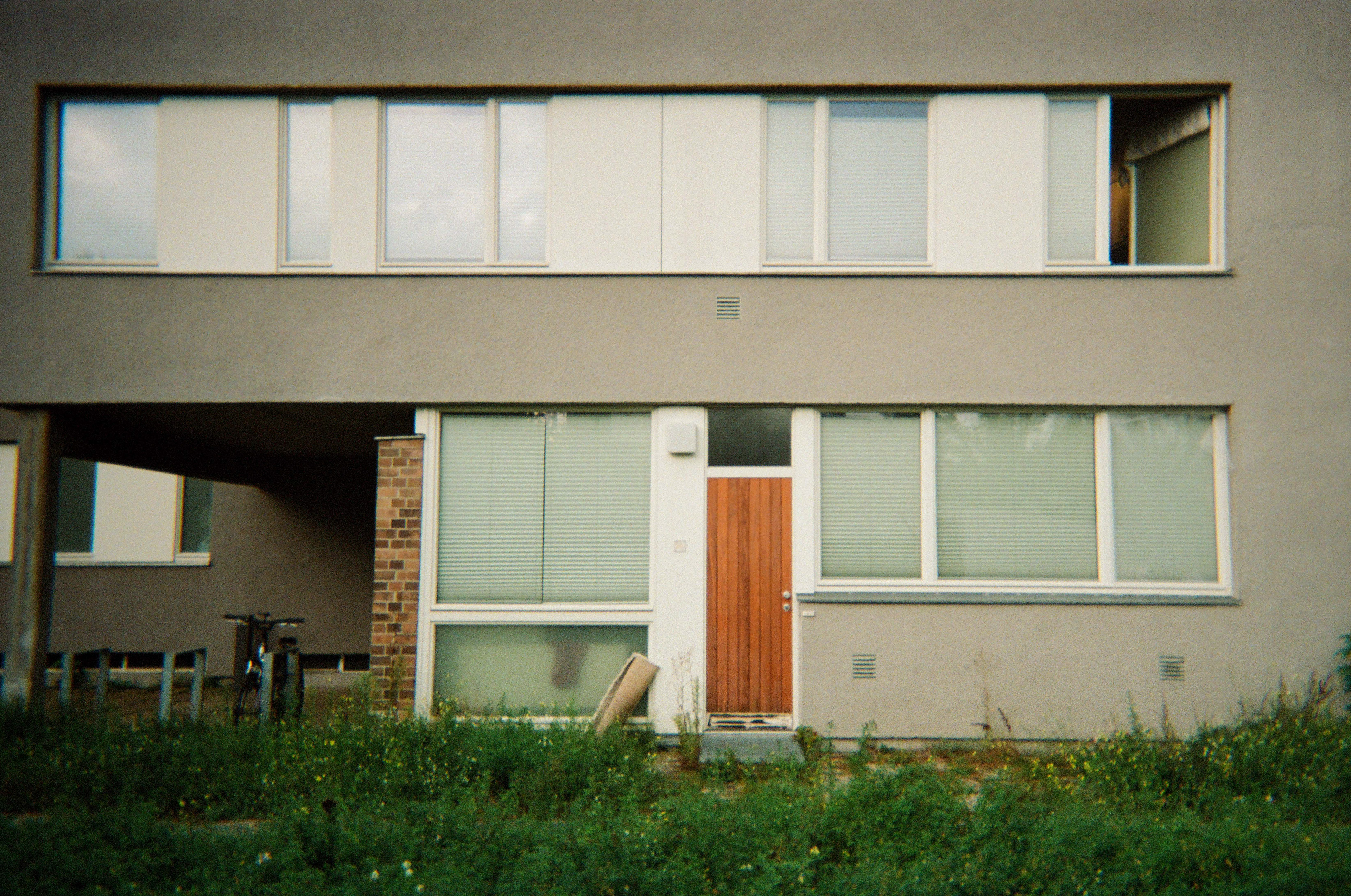
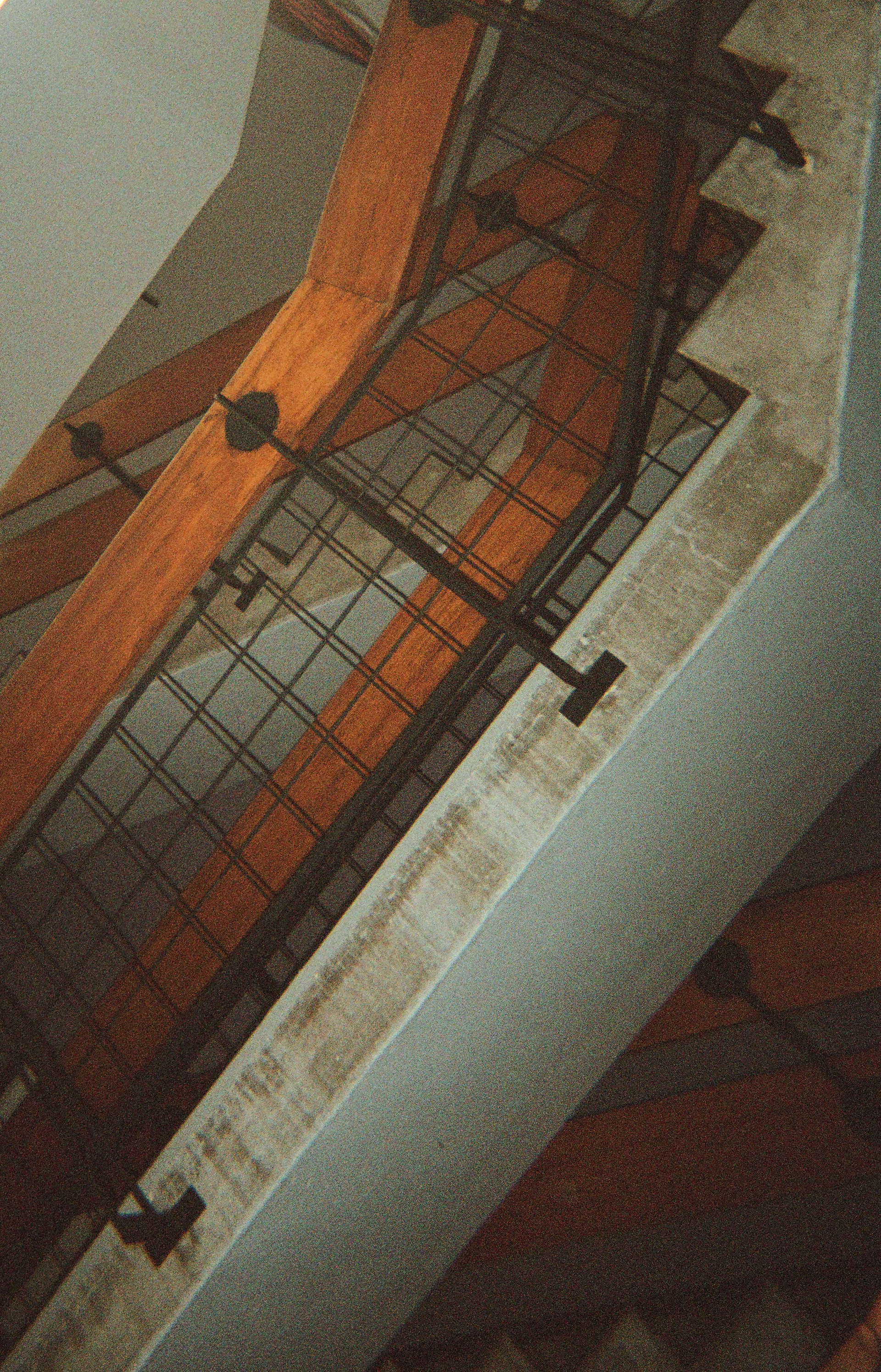
The Schlachtensee Student Village of the Free University of Berlin is situated on the site of a former farmstead in a wooded and sandy area between the lakes Wannsee and Krumme Lanke. It consists of 28 organically embedded houses around a village green. The complex was built in three expansion phases between 1957 and 1978 by the Berlin architectural firm of Hermann Fehling, Daniel Gogel and Peter Pfankuch and later by Kraemer, Pfennig, Sieverts & Partner. In post-war Berlin, the Studentendorf Schlachtensee was the first newly built academic housing. The financing of the construction by the Americans represented a crucial contribution to the desired "re-education" of the Germans and was intended to bring the people back to democracy, which was to be reflected in the village-like structure of the residential complex with its own town hall, grocery store and even theater hall. It is a striking example of the architectural reconnection of post-war modernism to the Neues Bauen movement of the 1920s.
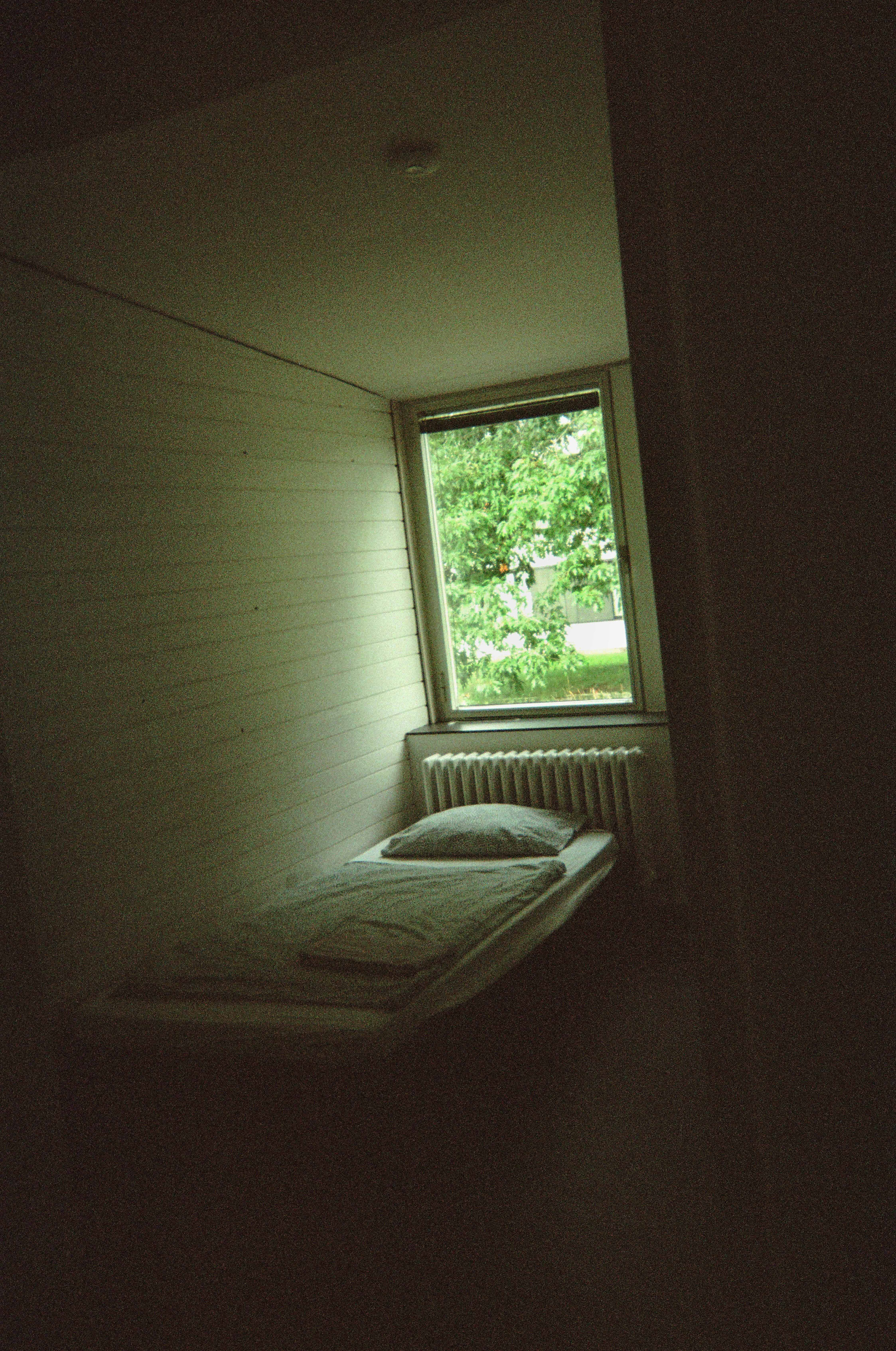
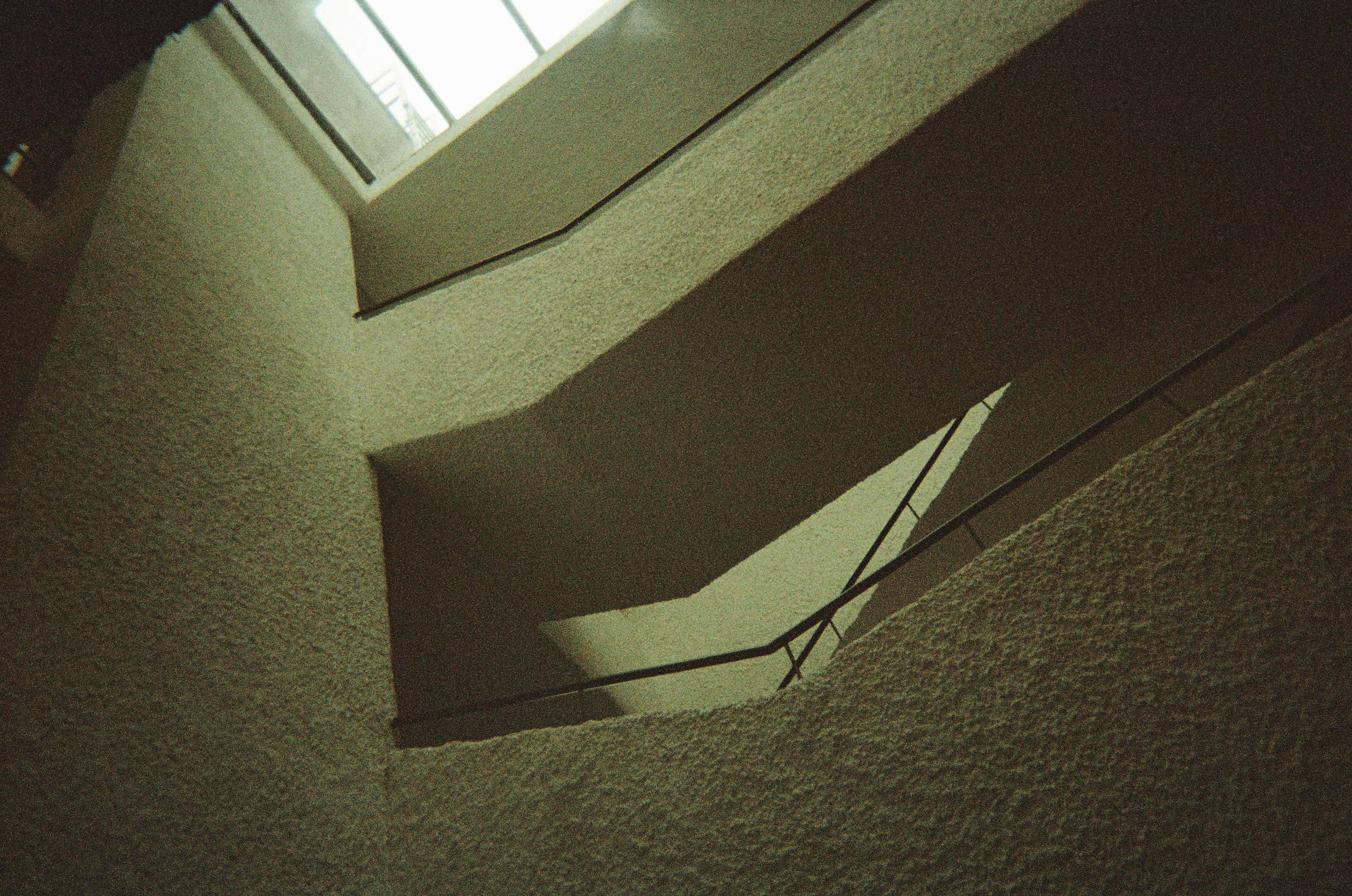
The small living cabins are each minimally furnished: with a table, chair, wardrobe, and bed - however, the furnishings are always arranged individually in each room. In contrast, the common areas and stairwells are spaciously designed.
WORKING GROUPS @ DENKMALVEREIN HAMBURG
Get to know the people behind the association - this video portraits some of the honorary and full-time staff for the occasion of the Max Brauer Prize ceremony on October 7, 2024, and at the same time shows you what opportunities for concrete involvement exist.
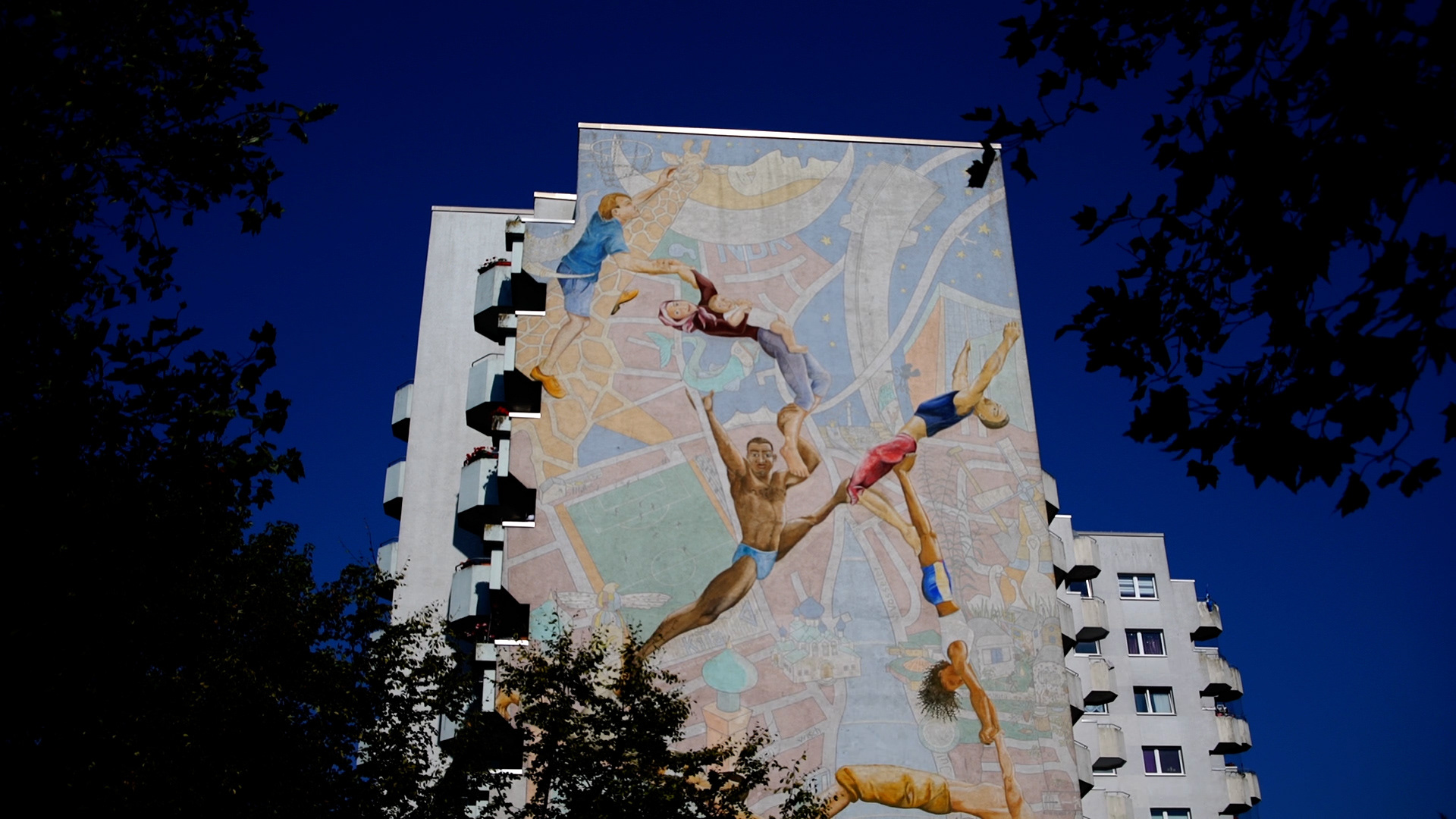
BERLIN HANSAVIERTEL:
HANSEATIC FLAIR ON THE SPREE RIVER?
Hansa-Viertel is the original name of the residential area between the Spree and Tiergarten, which was founded in 1874. The name commemorates the fact that the district was developed by the Berlin and Hamburg real estate company "Hansa," whose members were predominantly Hamburg entrepreneurs. It also alludes to the area's connection to Hamburg via the nearby Hamburger Bahnhof and the Spree River.
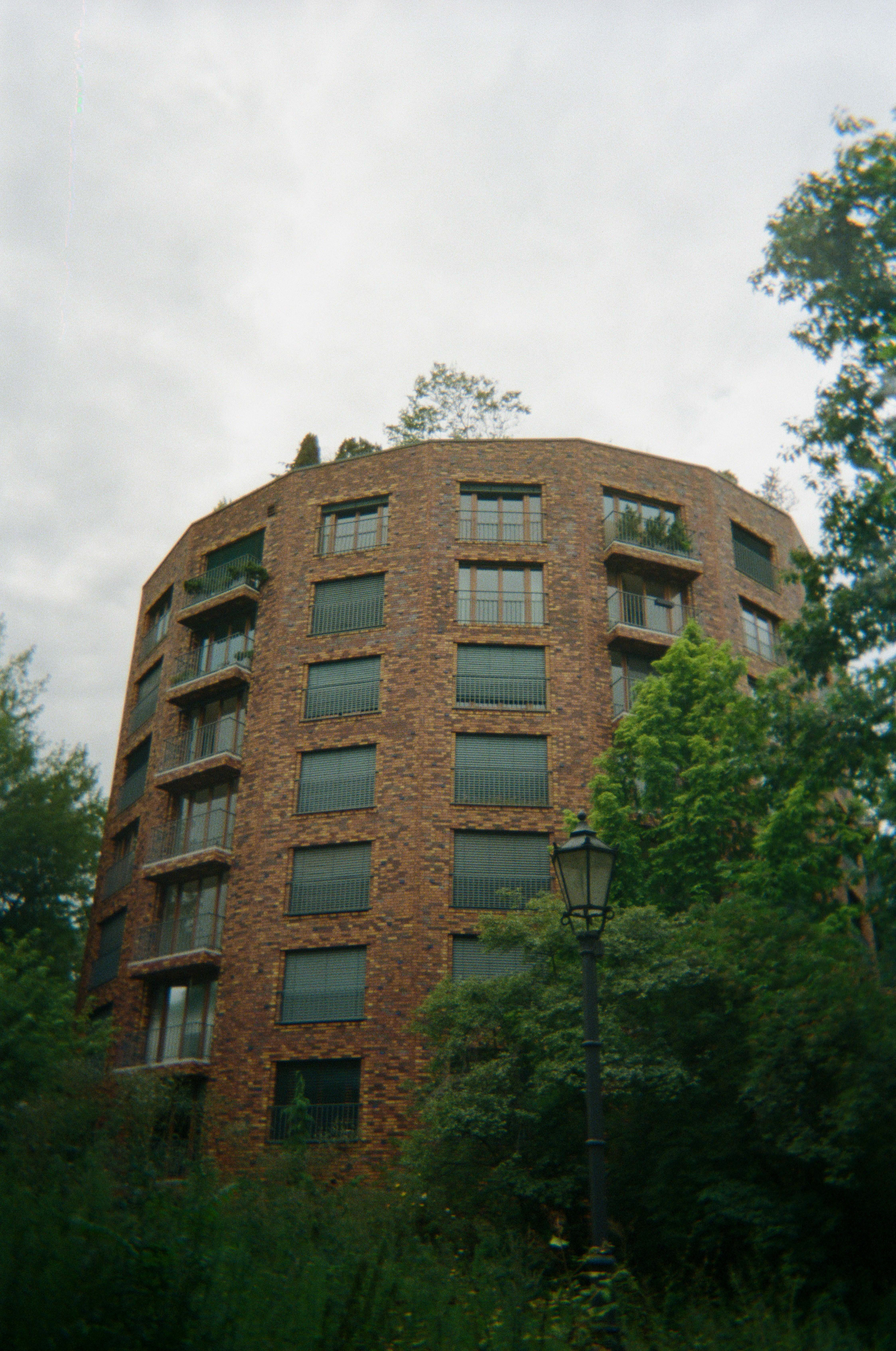
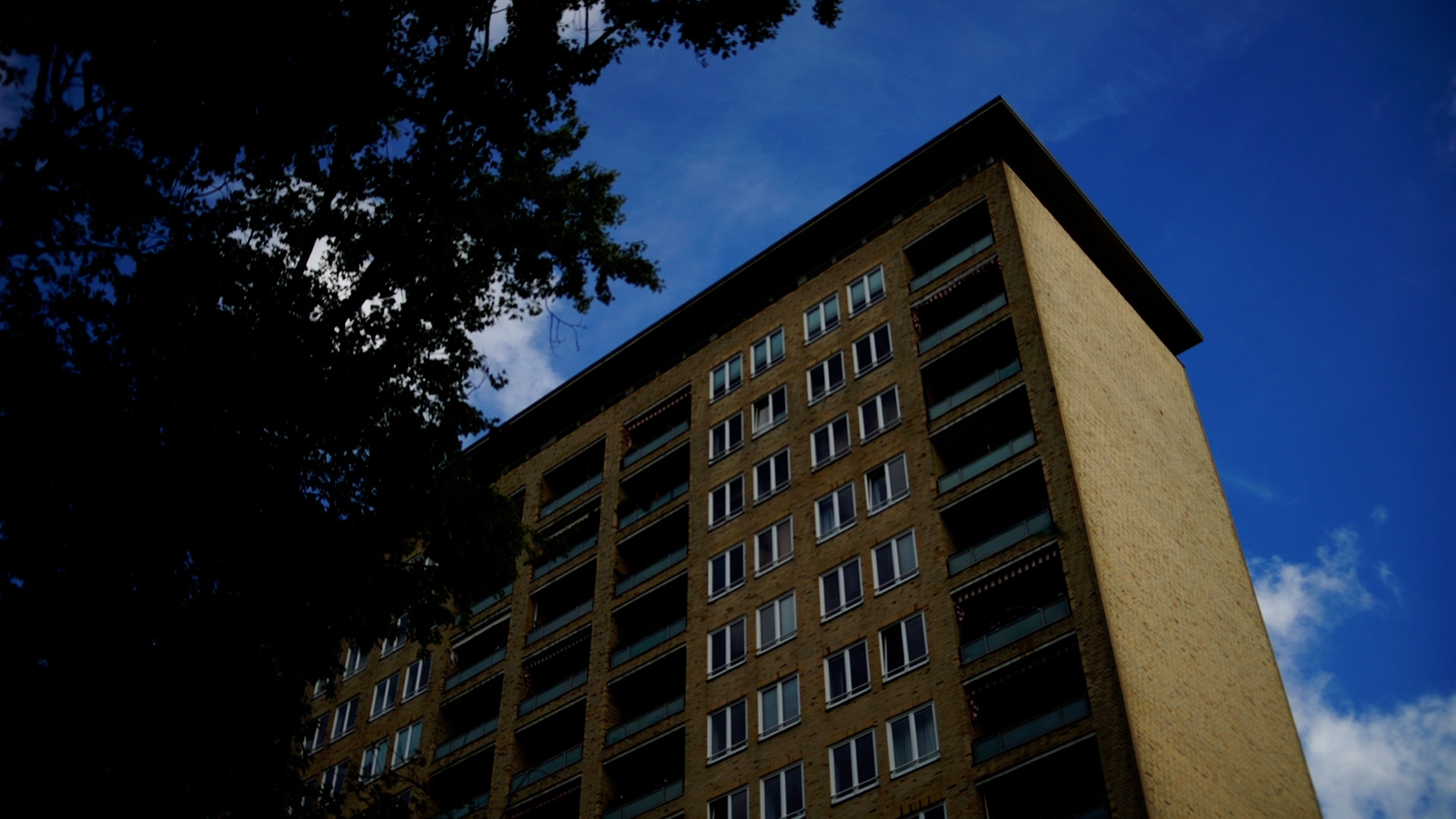
Backstein-Wohnturm, Benedict Tonon, 2001
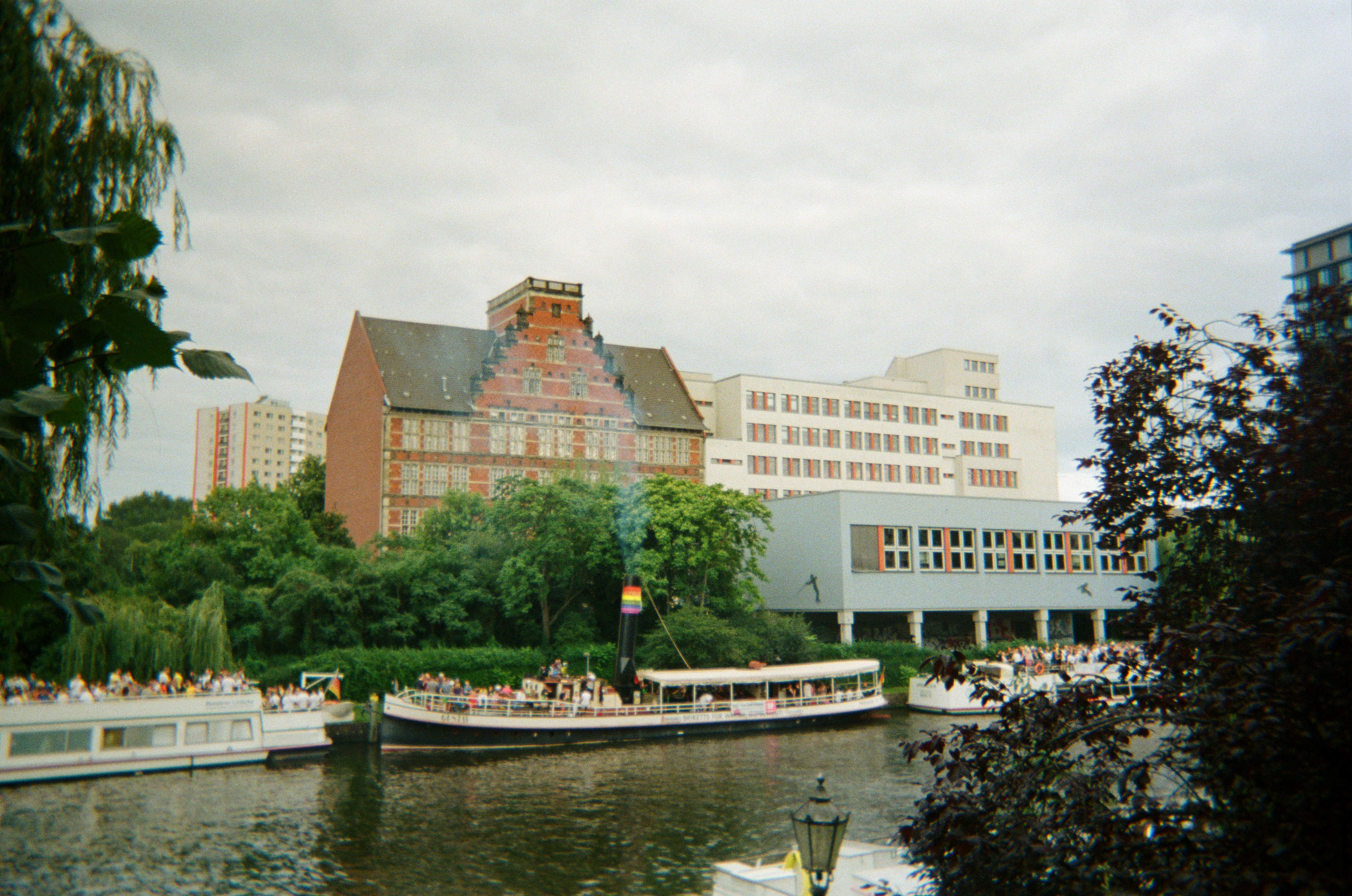
Holsteiner Ufer
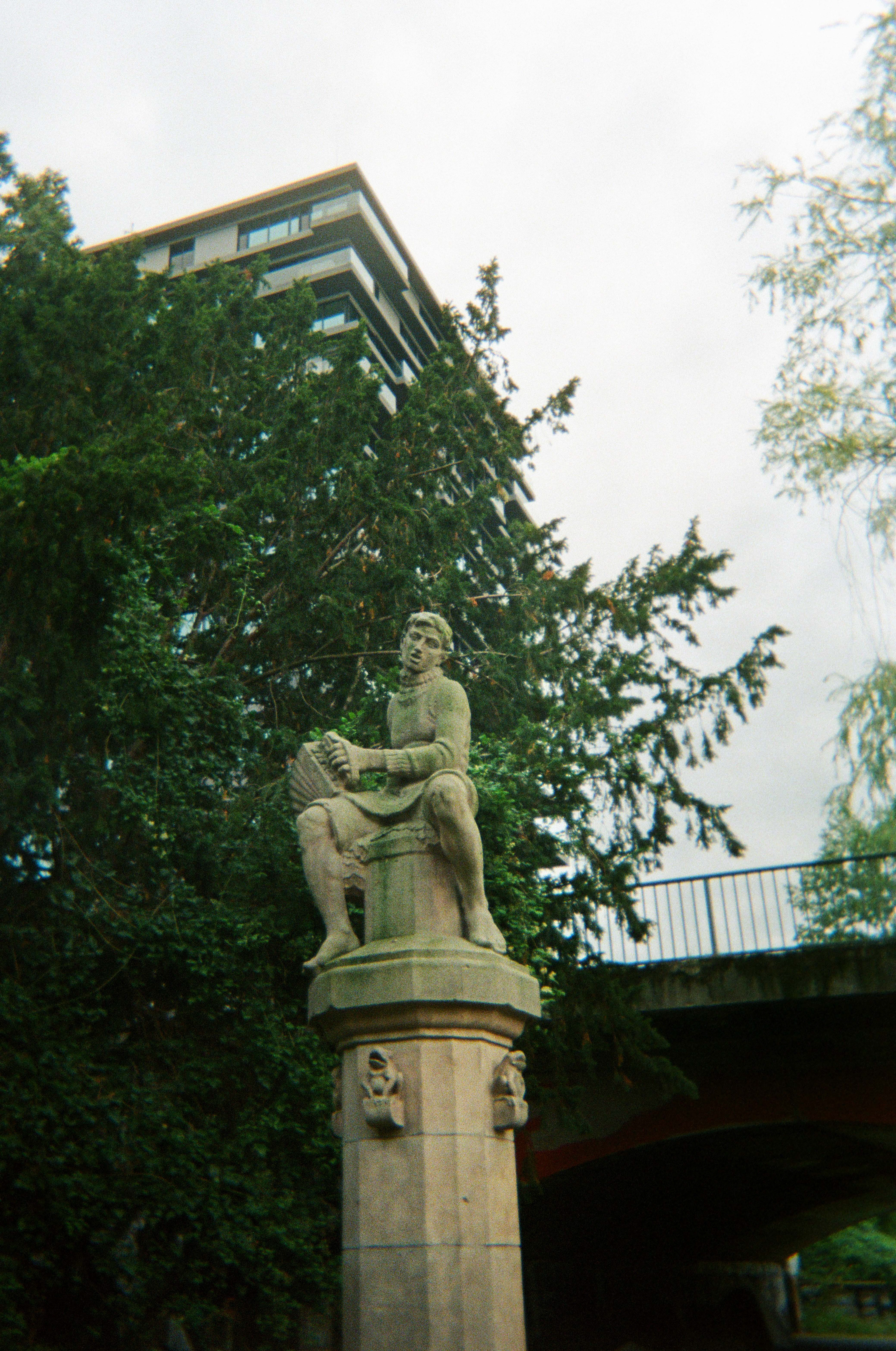
Schifferbrunnen, Hermann Hosaeus, 1914
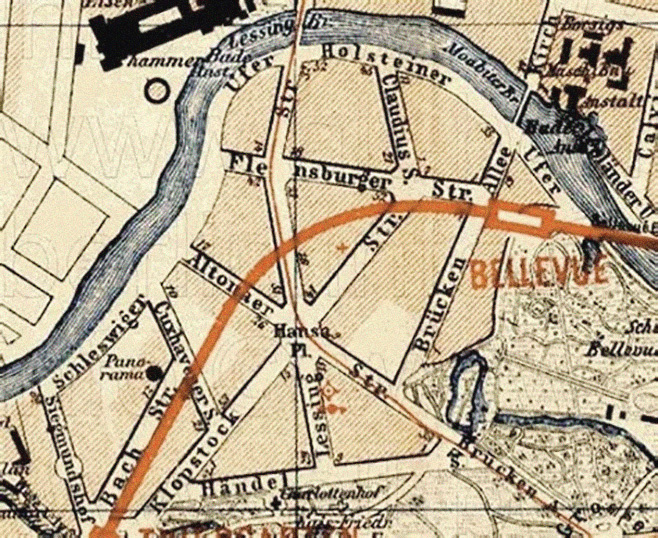
The Schifferbrunnen (Sailors' Fountain) on the Schleswig shore marks the outer entrance to Hansaviertel and greets ships entering from Charlottenburg via the Spree River with a romantic touch: a fairytale-like sailor boy sits with his legs spread wide on a harbor bollard, playing the accordion. The fountain's design is modeled on the medieval stock fountains of the Hanseatic cities and was created in 1914 by Hermann Hosaeus, who had grown up in Buxtehude, recalling Berlin's membership in the Hanseatic League during the 14th and 15th centuries. Next to it, Altonaer Straße crosses the river to the opposite bank, thus connecting the Hansaviertel with the neighboring Moabit. Hosaeus' many stone memorials made him famous after the First World War and also resonated with the spirit of the following years of the Nazi regime, making him a respected Berlin university professor until its end, when the pogrom and Second World War had already destroyed the houses around his old monuments. His ideologically charged sculptures remained undamaged and became controversial objects after the war. His "Soldat" in Harburg was placed in a new context by a counter-monument in 1988, and the Schifferbrunnen no longer spouts water.
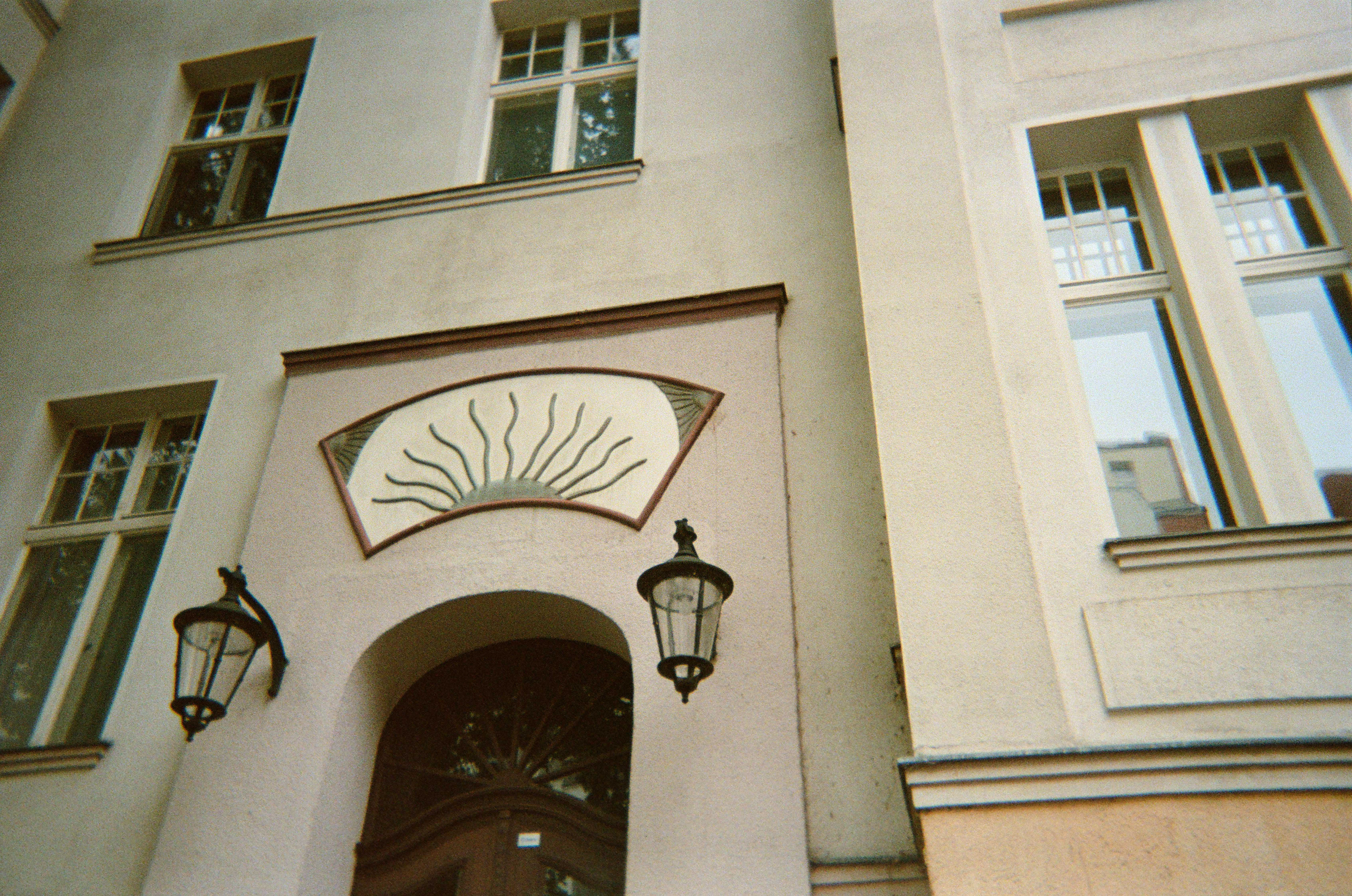
Altbaubestand Flotowstraße, Gründerzeit
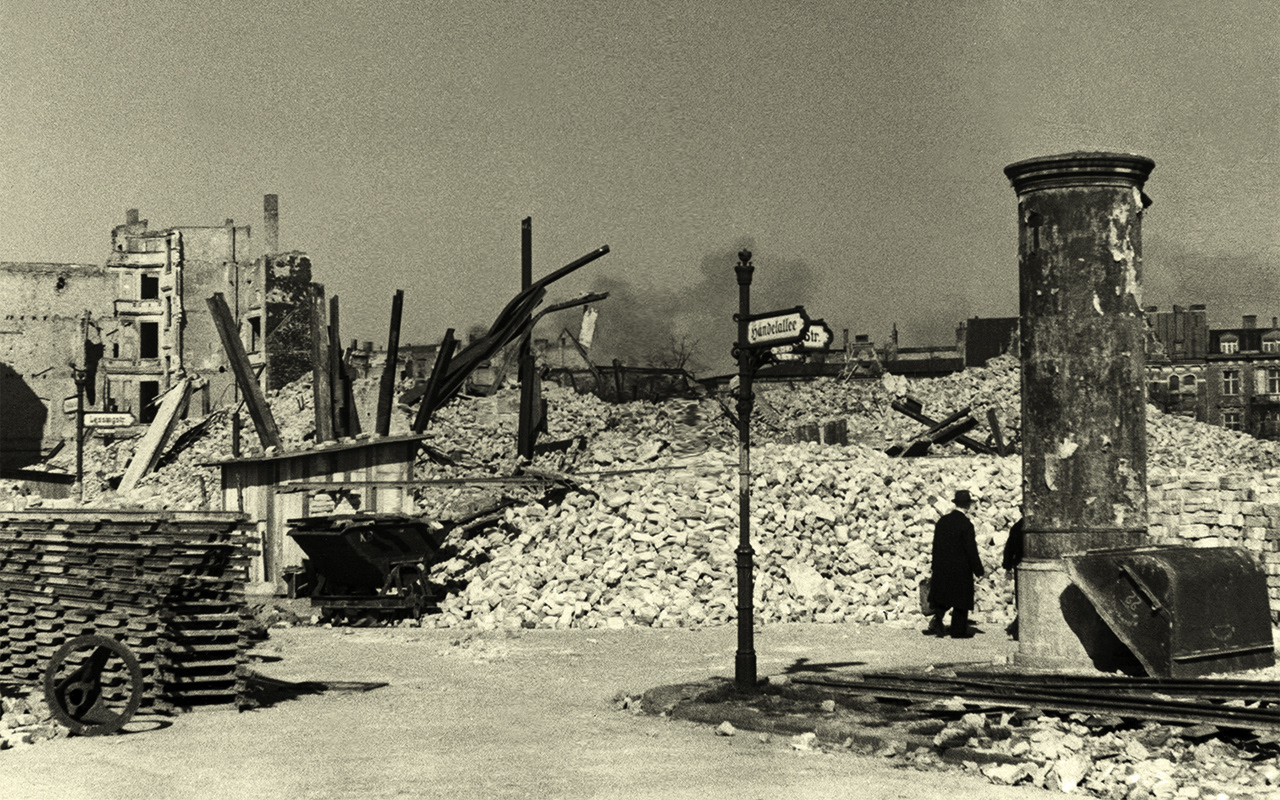
Trümmerberge Ecke Lessingstraße/Händelallee, 1945, Landesarchiv Berlin
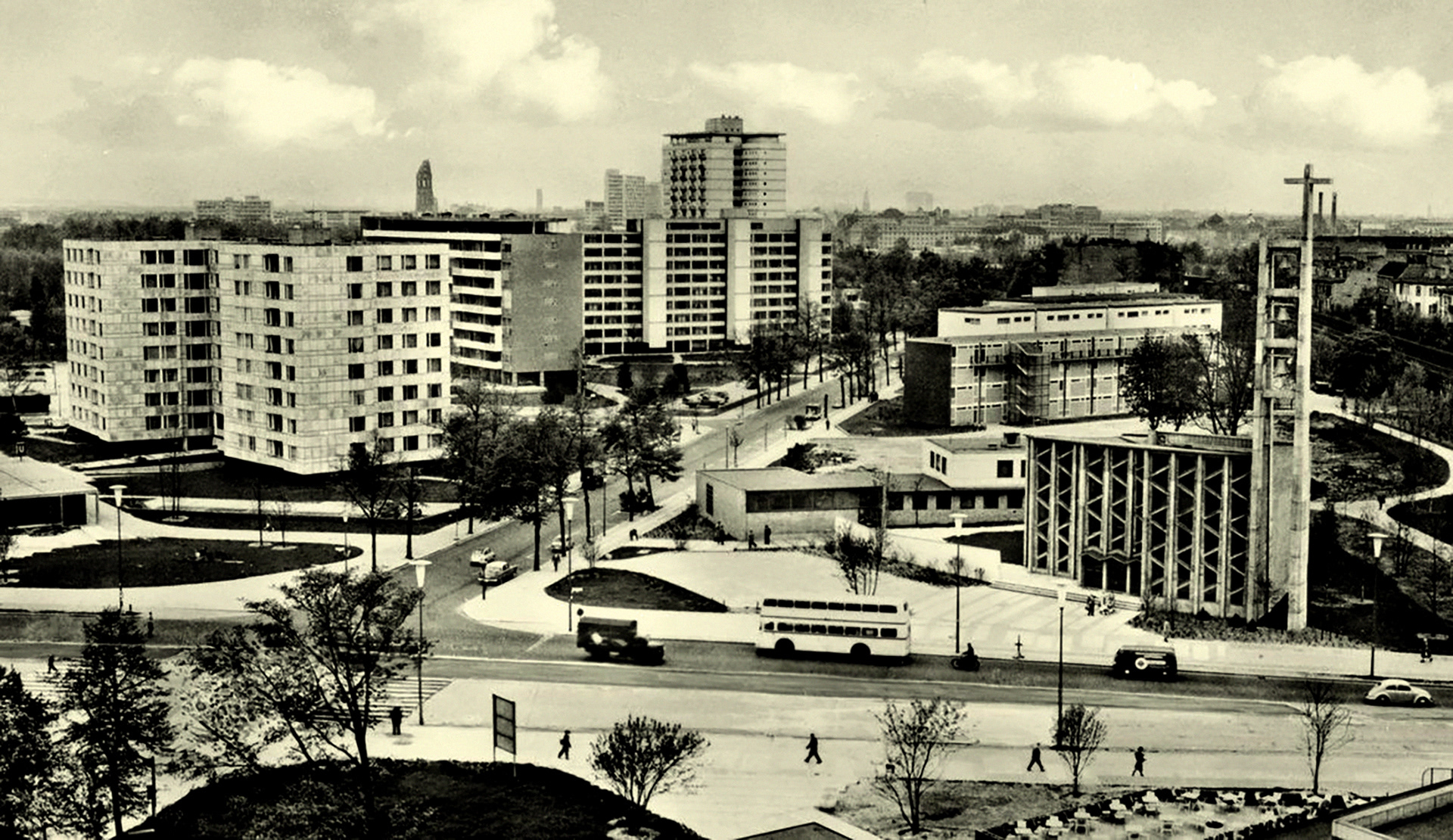
Interbau 1957, Landesarchiv Berlin
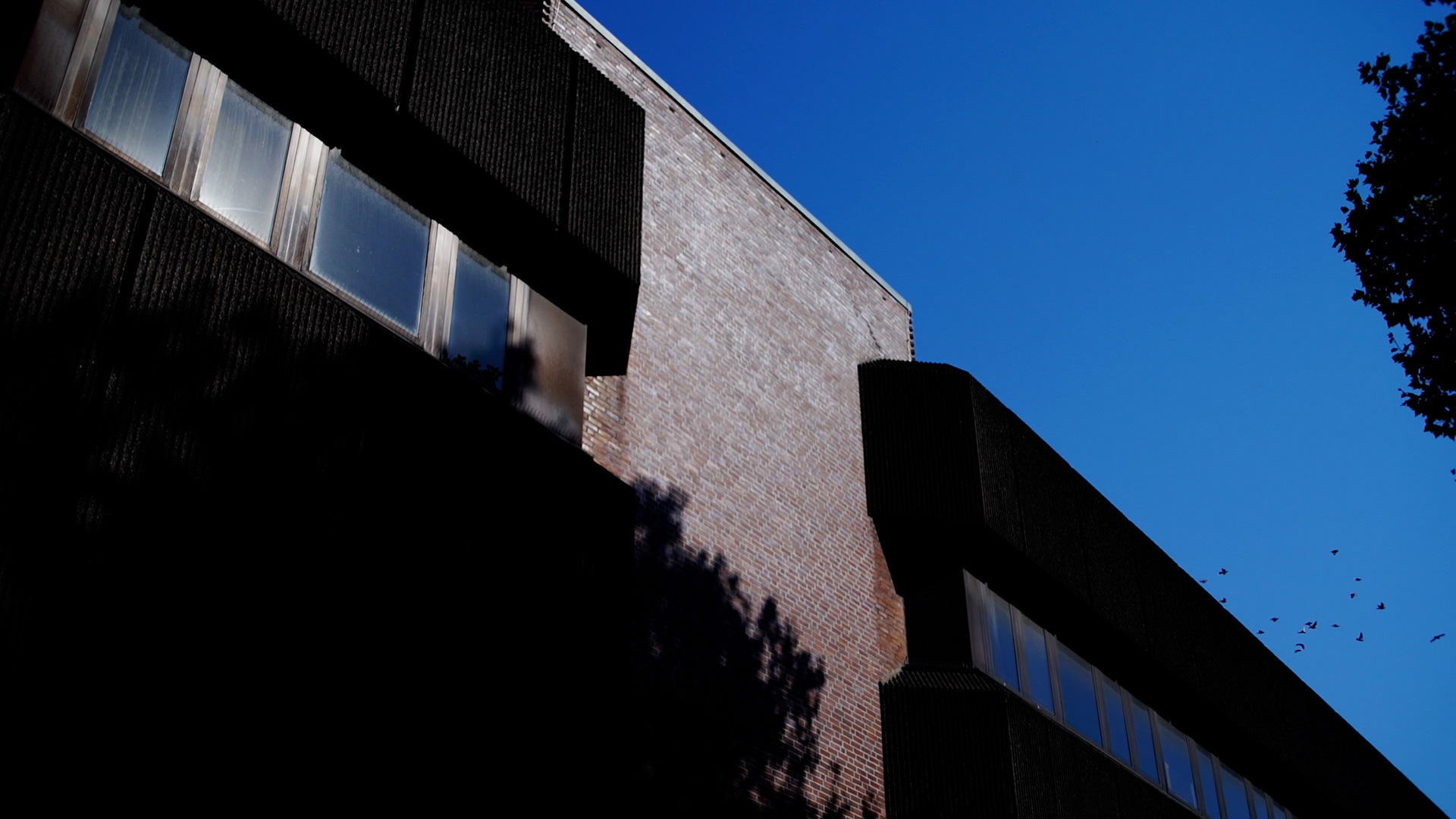
After the district was mostly destroyed by bombing, the now encapsulated area inside West-Berlin underwent radical modernization through architecture from the 50's onwards: The International Building Exhibition of 1957 commissioned architects such as Le Corbusier, Walter Gropius, Max Taut and Wassili Luckhardt to design groundbreaking high-rise complexes as a demonstration of modern Western architecture and as a counterpoint to the architectural style of East Berlin's Stalinallee. The former headquarters of the West Berlin Academy established itself as a cultural center in a Brutalist building designed by Werner Düttmann in 1960, situated in the shadow of the high-rises.
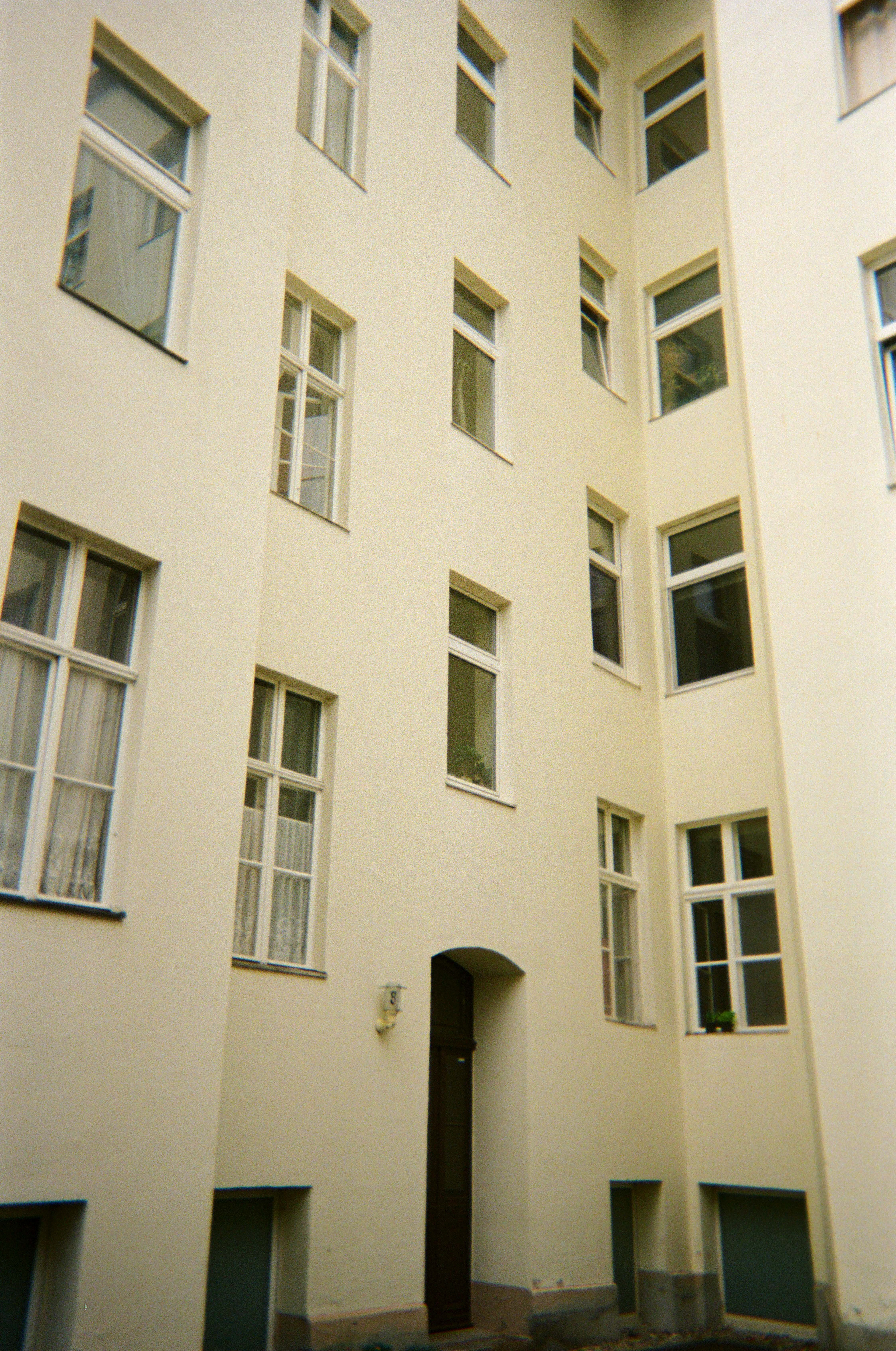
Altbaubestand Holsteiner Ufer, Gründerzeit
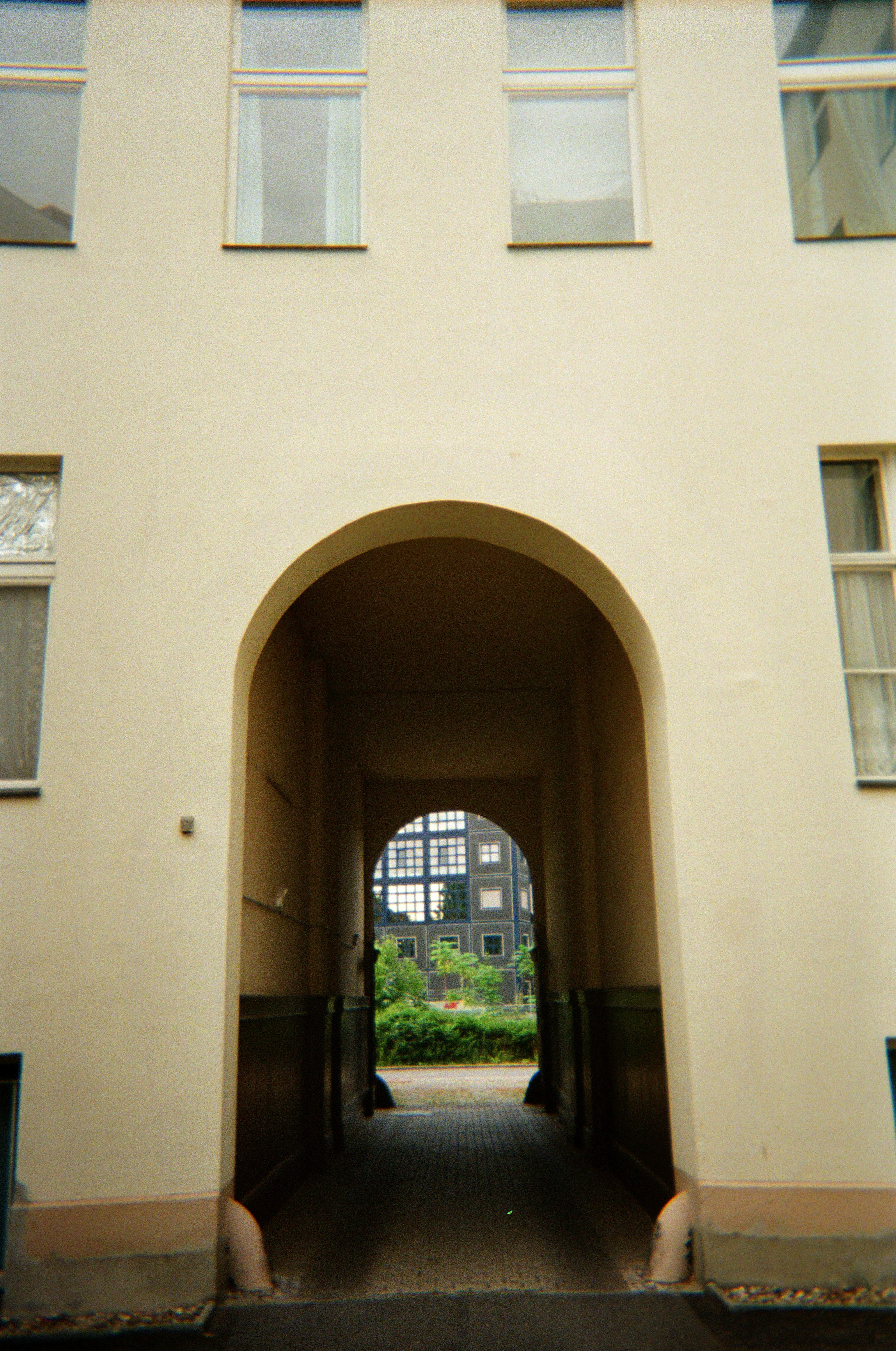
Altbaubestand Holsteiner Ufer, Gründerzeit
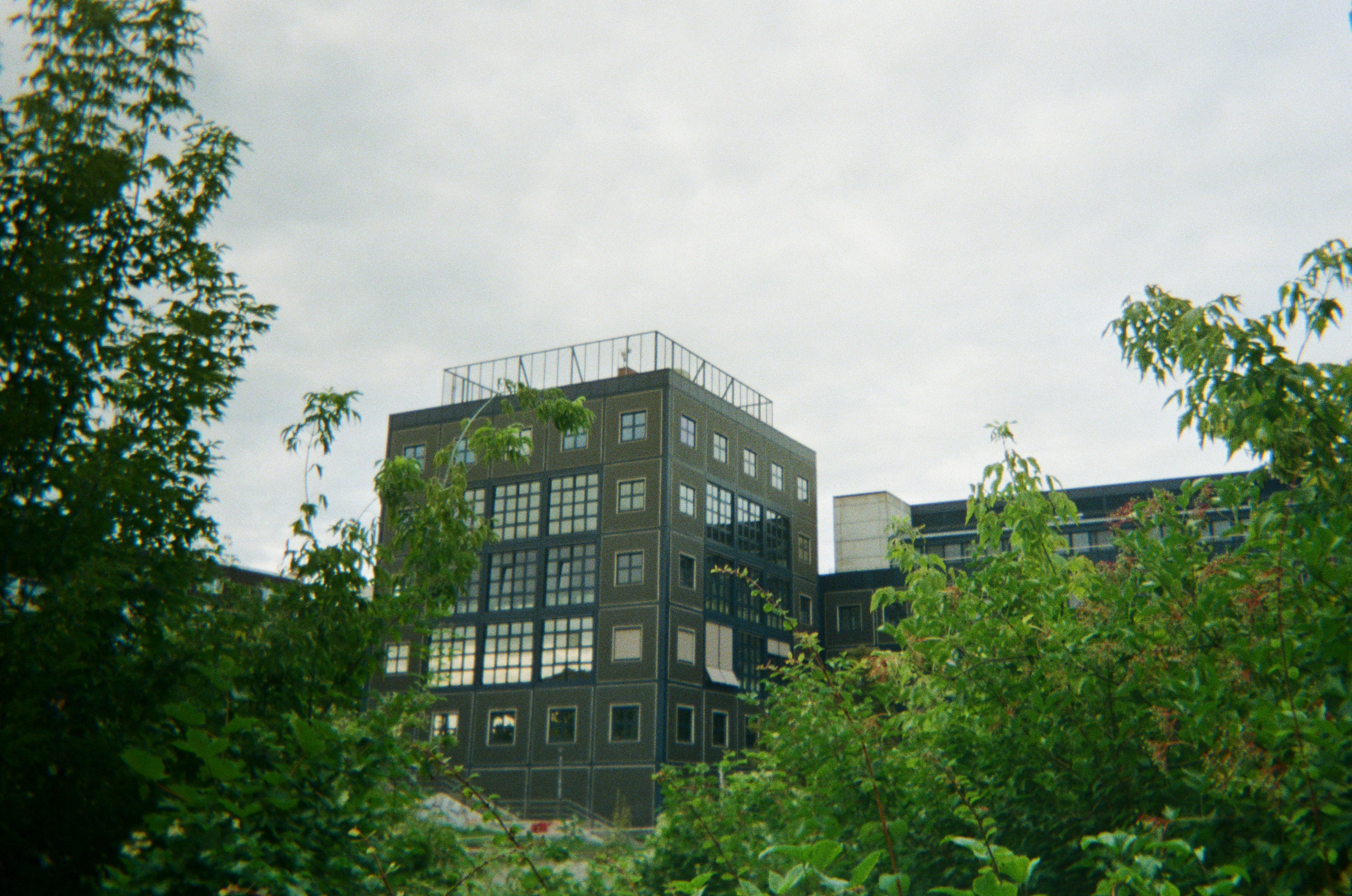
Focus Teleport, Joachim Ganz u. Walter Rolfes, 1990
The few remaining old courtyards offer a glimpse through their characteristic arched doorways to the opposite riverbank, which has also been taken over by modern buildings. The view extends from the Holsteiner Ufer across to Focus Teleport, an industrial park for technology companies built in the late 1980s on the former site of the Kampffmeyer mills. Kampffmeyer-Mühlen GmbH, based in Hamburg, was one of Germany's largest grain suppliers to the food and bakery industries.
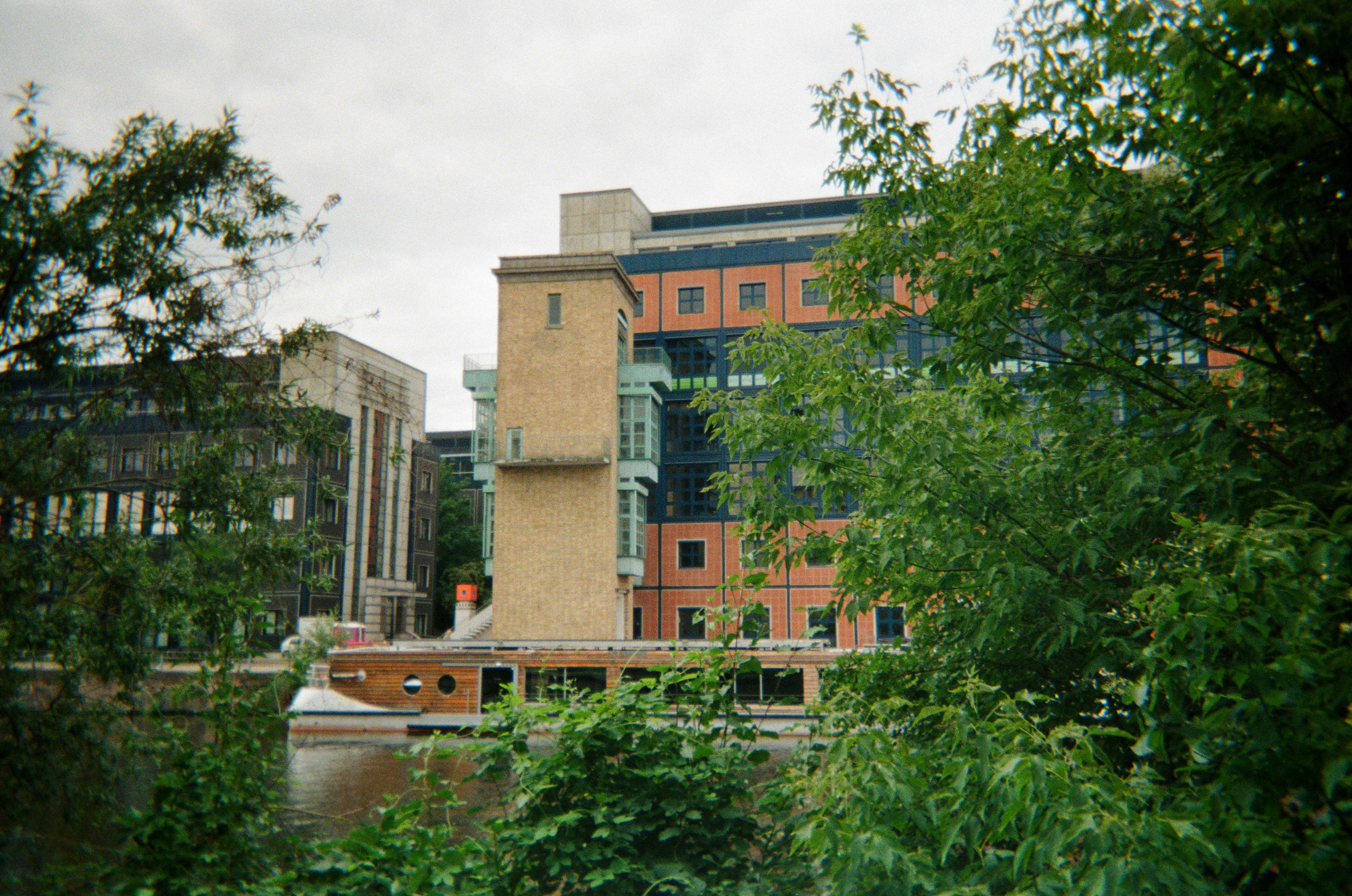
Focus Teleport, Joachim Ganz u. Walter Rolfes, 1990
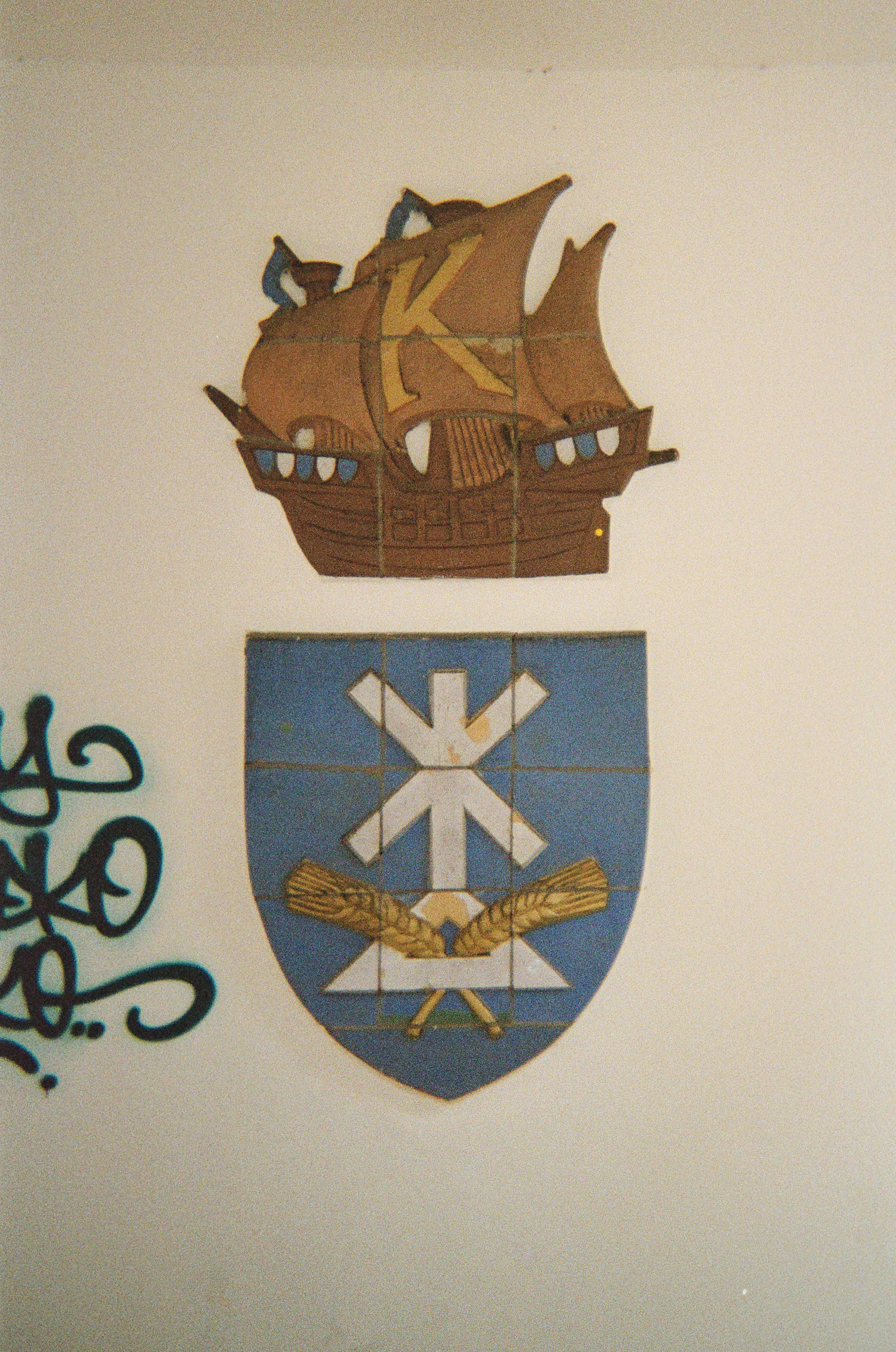
Kampffmeyer-Mühlen-Emblem
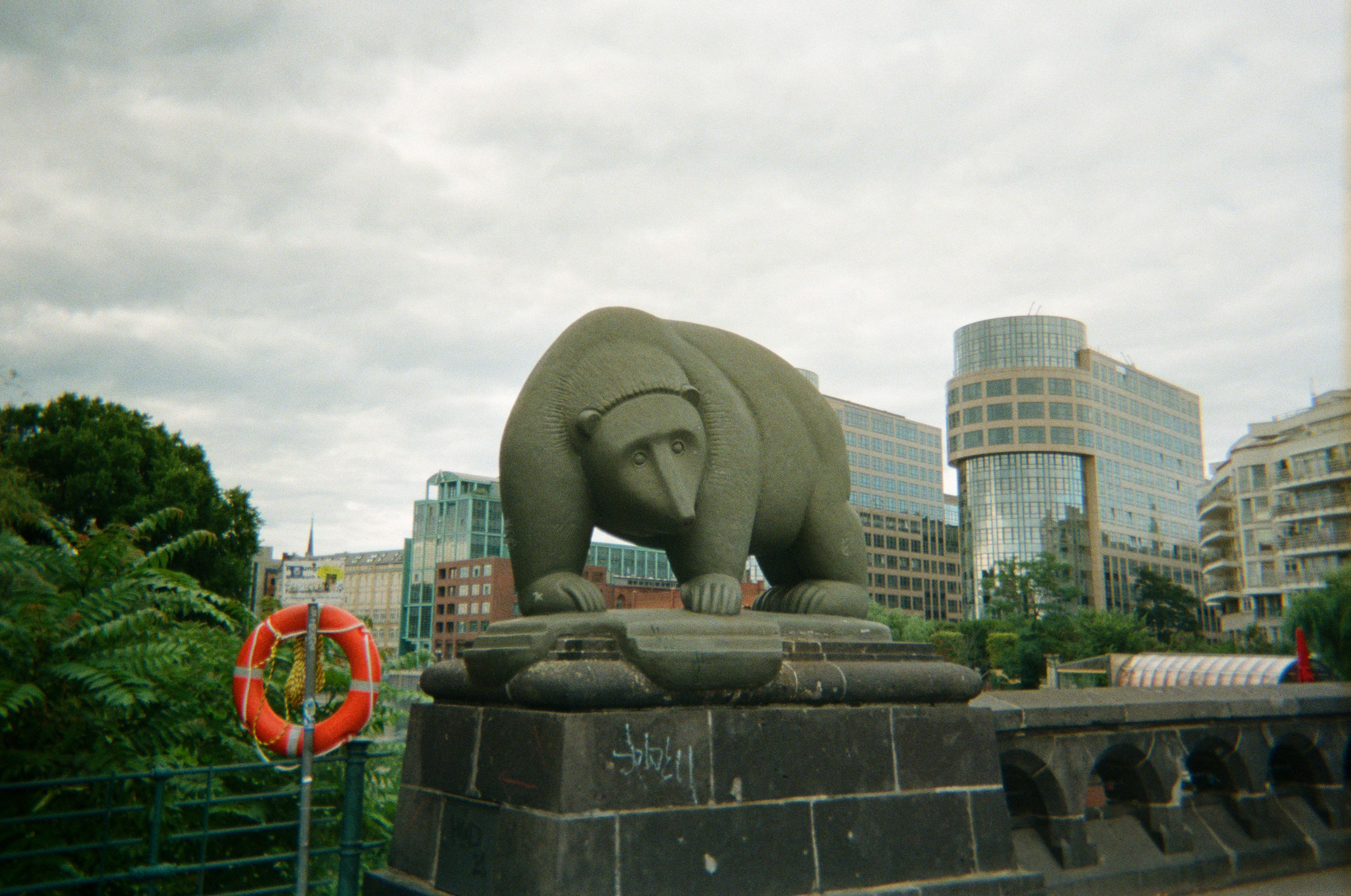
Bär auf der Moabiter Brücke, Günter Anlauf, 1981
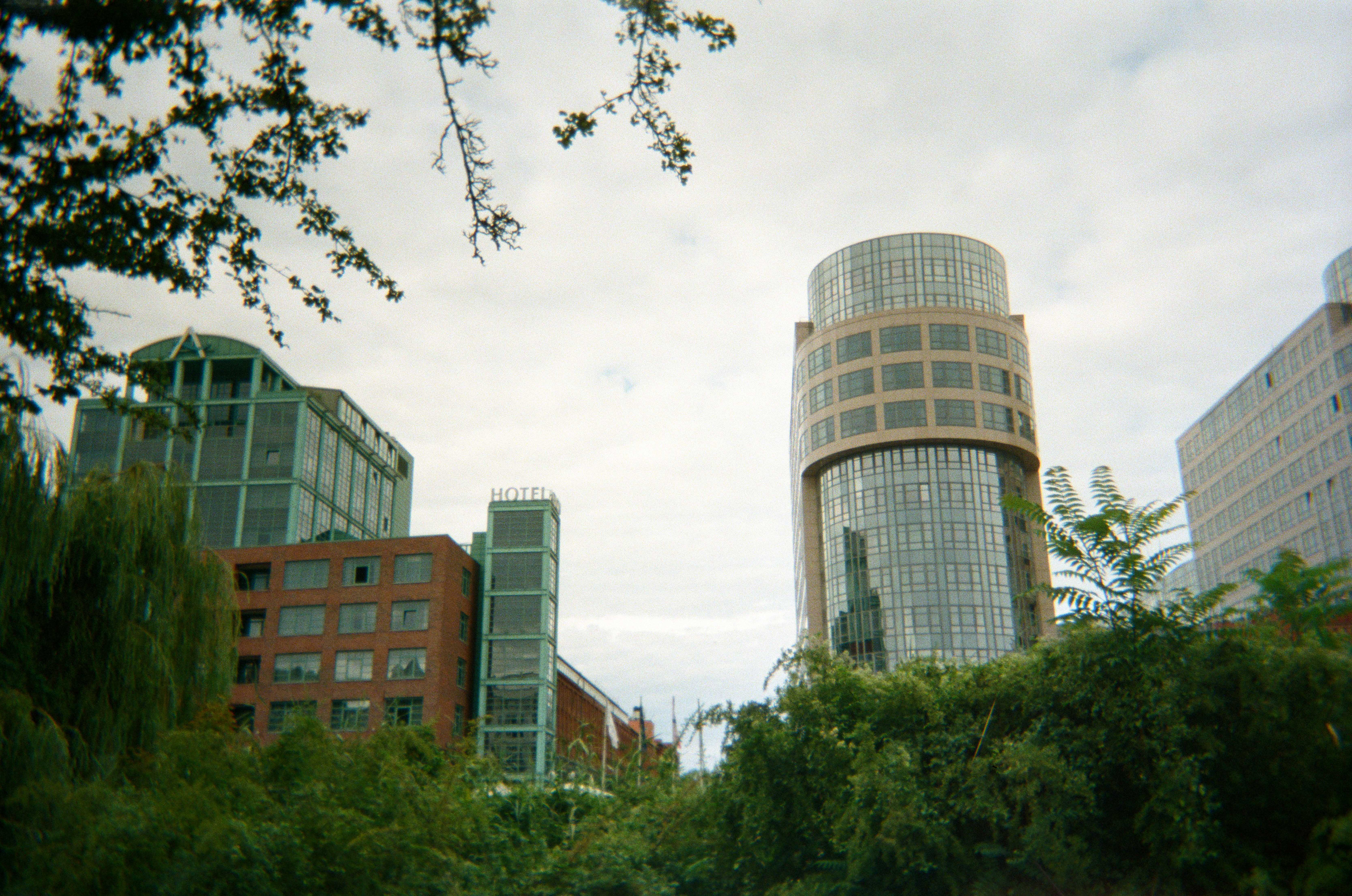
Alte Meierei mit Hotelanbau (u. Spree-Bogen), Wolf-Rüdiger Borchardt, 1993–1995
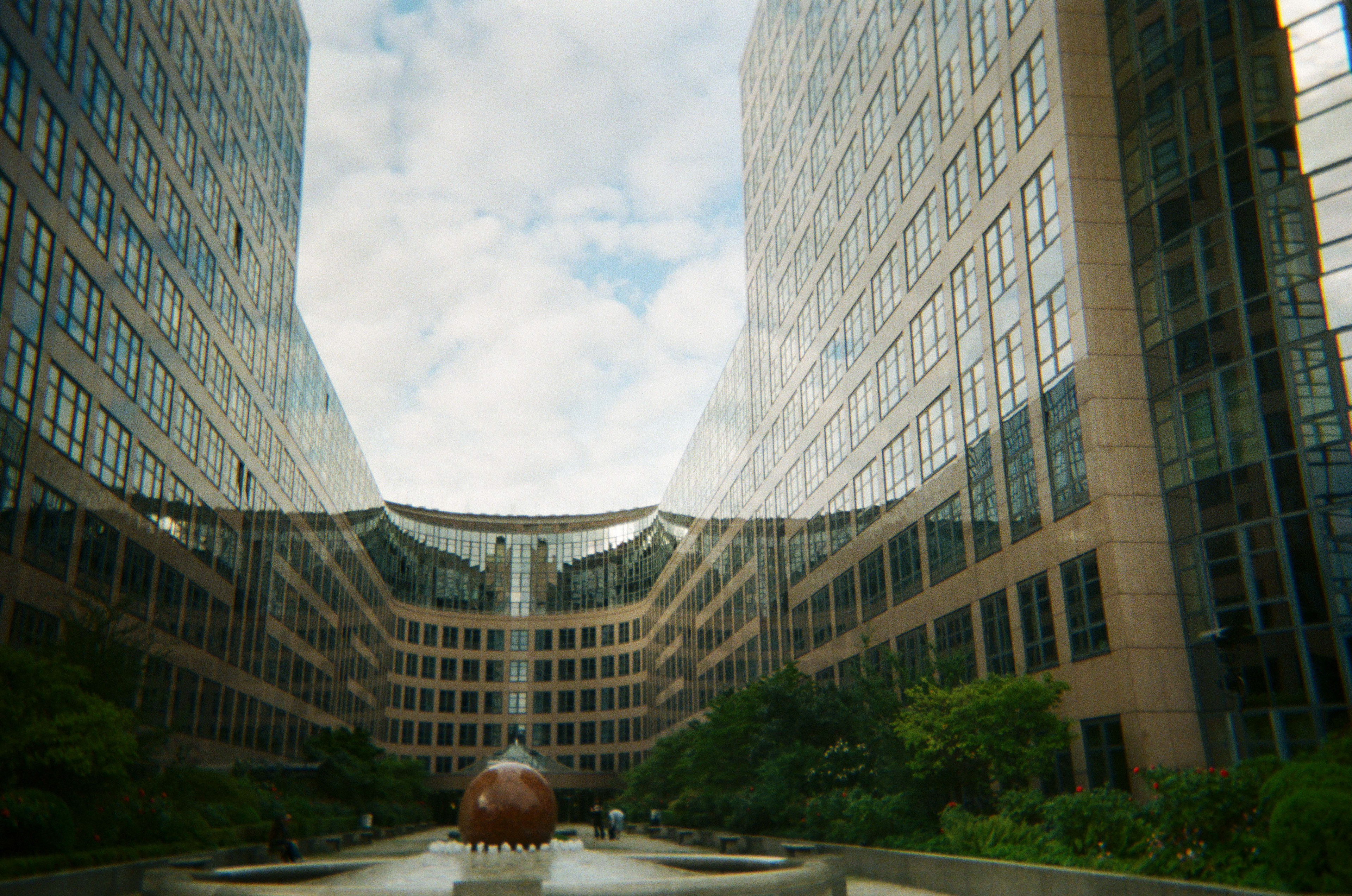
Spree-Bogen, ehemalig. Bundesinnenministerium, Kühn Bergander Bley, 1992–1994
Bellevue Palace and its S-Bahn station mark the boundary of the Hansa Quarter towards the city center. The Moabit Bridge leads from the Holsteiner Ufer to the other side, where we finally find ourselves in the heart of 1990s postmodern architecture in Alt-Moabit's Spreebogen.
DEMOLITION OF THE KÖHLBRAND BRIDGE?
Hamburg residents explain from different perspectives why the Köhlbrand Bridge should be preserved. These short videos have been produced since January 2024 and are continuously updated to promote the association's current online petition. Kristian Panzer, a film student and association member, is responsible for the production, working closely with the heritage association's "AG Kommunikation."
Trucker Kalli // We were allowed to climb into Kalli's truck and ride with him across the Köhlbrand Bridge and back. Kalli grew up in Billstedt and, even as a young boy, often went to the harbor with his siblings. He regularly crossed the Köhlbrand before the bridge even existed, taking the ferry that used to run there. He told us about this during our ride – and why the bridge absolutely must remain.
Tulga Beyerle // In her statement, the director of the Museum of Arts and Crafts explains why such a unique and elegant engineering structure as the Köhlbrand Bridge cannot simply be demolished.
Dieter Läpple // The emeritus professor of urban research at HafenCity University Hamburg and automotive engineer has studied the traffic load on and around the Köhlbrand Bridge and gives an overview of the facts from the Altona Balcony overlooking the bridge.
Maria Lehmann // Do you know who designed the Köhlbrand Bridge? No? No wonder! The architect wasn't even mentioned at its opening in 1974. In this interview, Maria Lehmann, widow of the architect Oskar Lehmann talks about the construction of this iconic Hamburg landmark. You'll also discover little-known, original construction models from the Geschichtswerkstatt Wilhelmsburg and original photographs from the State Archives.